
![Swim Nappy Bundle [Ship Oct 5 - 10] - Mimi & Co](http://mimiandco.com.au/cdn/shop/files/swim-nappy-bundle-ship-oct-5-10-5796576.jpg?v=1770171125)

![Toilet Training Undies Pants [Jan Preorder] - Mimi & Co](http://mimiandco.com.au/cdn/shop/files/toilet-training-undies-pants-jan-preorder-6316642.jpg?v=1766216229&width=1200)


![Reusable Bamboo Mimi™ Wipes [5 Pack] - Mimi & Co](http://mimiandco.com.au/cdn/shop/files/reusable-bamboo-mimi-wipes-5-pack-7600782.jpg?v=1773649075)


![Reusable Mimi® Menstrual Underwear [Shipping 31/9] - Mimi & Co](http://mimiandco.com.au/cdn/shop/files/reusable-mimi-menstrual-underwear-shipping-319-6508918.png?v=1776734572)


![Toilet Training Undies Pants 2.0 | Baby Duck [Ships September] - Mimi & Co](http://mimiandco.com.au/cdn/shop/files/toilet-training-undies-pants-20-baby-duck-ships-september-9296055.png?v=1784808614&width=104)




![Travel Bamboo Change Mat [Ships March 14th] - Mimi & Co](http://mimiandco.com.au/cdn/shop/files/travel-bamboo-change-mat-ships-march-14th-1490896.jpg?v=1769606287&width=104)


![Reusable Bamboo Mimi™ Wipes [10 Pack] - Mimi & Co](http://mimiandco.com.au/cdn/shop/files/reusable-bamboo-mimi-wipes-10-pack-2507756.jpg?v=1773666247&width=104)


If you've been researching cloth nappies, you've probably come across conflicting advice. Some sources say you can boil your nappies to sanitise them. Others say never to use boiling water. Some talk about PUL, others about TPU, and sometimes they seem to use the terms interchangeably.
Here's what's actually going on, and why it matters for how you care for your nappies.
First, let's clear up the confusion
PUL stands for Polyurethane Laminate. It's a fabric (usually polyester) that has been laminated with a thin polyurethane film to make it waterproof. This is what gives cloth nappy shells their water-resistant properties.
TPU stands for Thermoplastic Polyurethane. Here's the key thing: TPU isn't actually a different fabric. It's just the film used in the lamination process. When people say "TPU" in the context of cloth nappies, they're usually referring to PUL that's been made using a heat-bonding process (using TPU film) rather than a chemical solvent process.
So technically, they're both PUL. It's just that the manufacturing method is different.
Here's where the terminology gets confusing. When cloth nappies first started using polyurethane laminate, the chemical solvent method was really the only way to do it. So it was simply called PUL. The term "PUL" refers to the laminate layer itself, not how it's bonded. We still use polyurethane laminate today, just made differently.
The old way vs the new way
Before around 2010, PUL fabric for cloth nappies was almost exclusively made using a solvent-bonding process. Chemical solvents were used to bond the polyurethane film to the fabric. This created an incredibly durable material. So durable, in fact, that it could withstand boiling, autoclaving (medical-grade sterilisation), and pretty harsh treatment.
The problem? The manufacturing process released volatile organic compounds (VOCs), chemical fumes, and waste products into the environment. It wasn't great.
Around 2010, the cloth nappy industry shifted to heat-bonded TPU lamination. Instead of chemical solvents, manufacturers started using heat and pressure to bond the TPU film to the fabric. This newer process produces no VOC emissions and generates no solid waste. It's a much cleaner, more environmentally friendly approach.
This is the key thing to remember: if you see "TPU" on a product, you can be confident it's thermally bonded. But if you see "PUL", it could be either chemically bonded or thermally bonded. Most modern cloth nappy brands use "TPU" specifically to signal they're using the newer, cleaner heat-bonding process.
Why this matters for your nappies
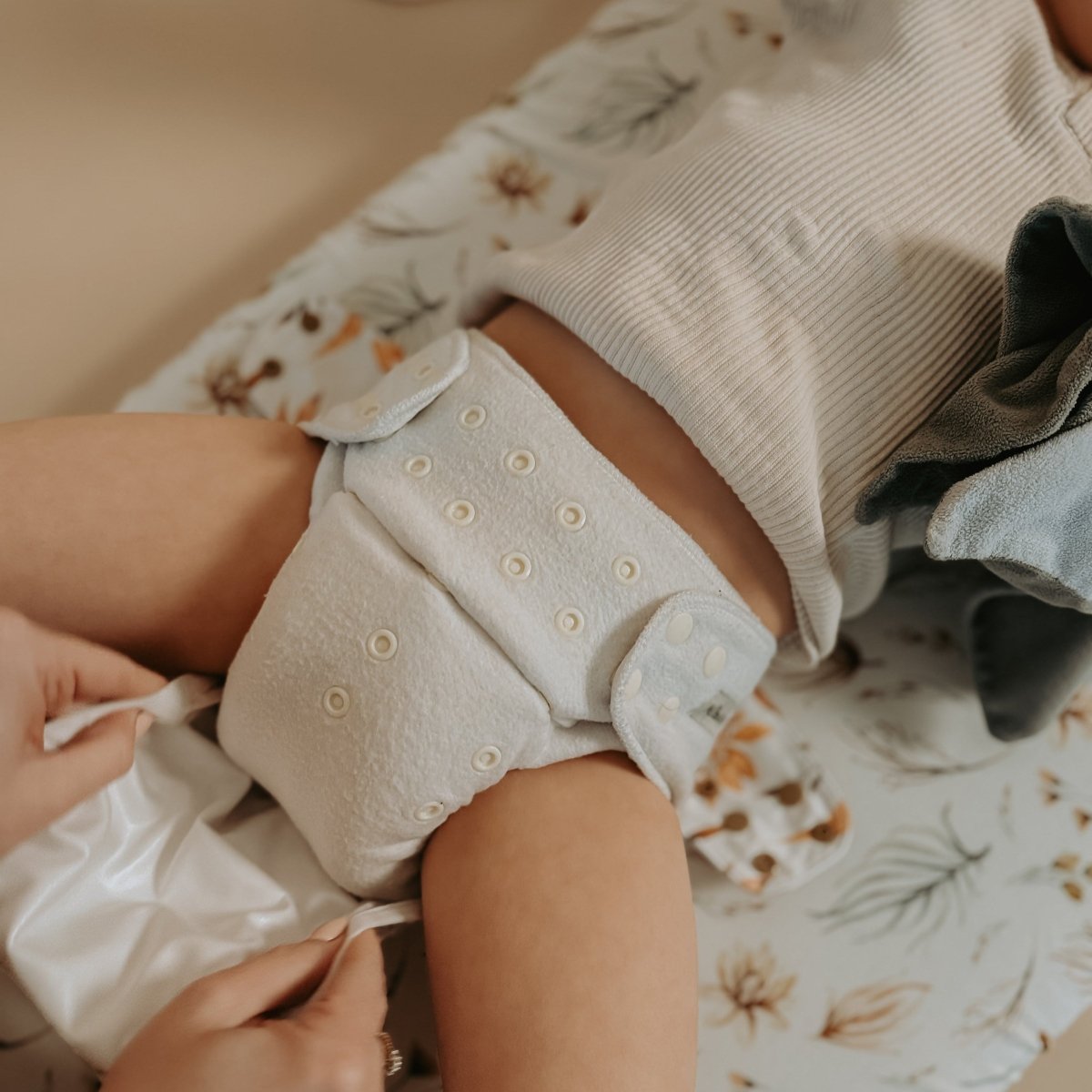
Heat-bonded TPU is softer, stretchier, and more comfortable than the old solvent-bonded PUL. But there's a trade-off: it can't handle the same level of heat and harsh treatment.
If you bought your cloth nappies any time in the last 10-15 years, they almost certainly use heat-bonded TPU, not the old solvent-bonded PUL. This means:
Don't boil them.
The old advice about boiling nappies comes from the era of solvent-bonded PUL. Boiling modern TPU nappies will cause the laminate to separate from the fabric.
Avoid sanitise cycles.
Many washing machines have a sanitise or steam setting that uses very high temperatures. These can damage heat-bonded TPU.
Wash at 65°C or below.
This is plenty hot enough to get your nappies clean without risking damage to the waterproof layer.
Air dry or use low heat. High heat in the dryer can also cause delamination over time.
What is delamination?
Delamination is when the waterproof TPU film starts to separate from the fabric. You'll notice it as bubbling, peeling, or a texture that looks a bit like a peeling sunburn. Once this happens, your nappy shell can start to leak from those areas, and the delicate lining can get holes.
Delamination can happen naturally over many years of use, but it's often accelerated by improper care, particularly excessive heat.
At Mimi & Co, we only use TPU
Mimi & Co has only ever used heat-bonded TPU in our products. We've never used solvent-bonded PUL. This means our nappies benefit from the softer, stretchier feel and the cleaner manufacturing process, but it also means they need to be cared for properly.
If you've come across old advice suggesting you can boil cloth nappies, treat them with high heat, or run them through sanitise cycles, that advice is outdated. It comes from a time when cloth nappies were made differently, and following it will likely damage your modern nappies.

The bottom line
PUL and TPU often get used interchangeably online (even by manufacturers and brands), but they refer to different manufacturing processes. The old solvent-bonded PUL that could survive boiling is largely a thing of the past. It's mainly used in medical and institutional settings now, not consumer cloth nappies.
If your nappies were purchased after 2010, assume they use heat-bonded TPU and care for them accordingly (plus you can always check with your brand what type of PUL they use). Keep wash temperatures at 65°C or below, skip the sanitise cycle, and air dry or tumble on low heat.
Your nappies will thank you for it.


Leave a comment
All comments are moderated before being published.
This site is protected by hCaptcha and the hCaptcha Privacy Policy and Terms of Service apply.