
![Swim Nappy Bundle [Ship Oct 5 - 10] - Mimi & Co](http://mimiandco.com.au/cdn/shop/files/swim-nappy-bundle-ship-oct-5-10-5796576.jpg?v=1770171125)

![Toilet Training Undies Pants [Jan Preorder] - Mimi & Co](http://mimiandco.com.au/cdn/shop/files/toilet-training-undies-pants-jan-preorder-6316642.jpg?v=1766216229&width=1200)


![Reusable Bamboo Mimi™ Wipes [5 Pack] - Mimi & Co](http://mimiandco.com.au/cdn/shop/files/reusable-bamboo-mimi-wipes-5-pack-7600782.jpg?v=1773649075)


![Reusable Mimi® Menstrual Underwear [Shipping 31/9] - Mimi & Co](http://mimiandco.com.au/cdn/shop/files/reusable-mimi-menstrual-underwear-shipping-319-6508918.png?v=1776734572)

![Toilet Training Undies Pants 2.0 | Baby Duck [Ships September] - Mimi & Co](http://mimiandco.com.au/cdn/shop/files/toilet-training-undies-pants-20-baby-duck-ships-september-9296055.png?v=1784808614&width=104)



![Travel Bamboo Change Mat [Ships March 14th] - Mimi & Co](http://mimiandco.com.au/cdn/shop/files/travel-bamboo-change-mat-ships-march-14th-1490896.jpg?v=1769606287&width=104)


![Reusable Bamboo Mimi™ Wipes [10 Pack] - Mimi & Co](http://mimiandco.com.au/cdn/shop/files/reusable-bamboo-mimi-wipes-10-pack-2507756.jpg?v=1773666247&width=104)
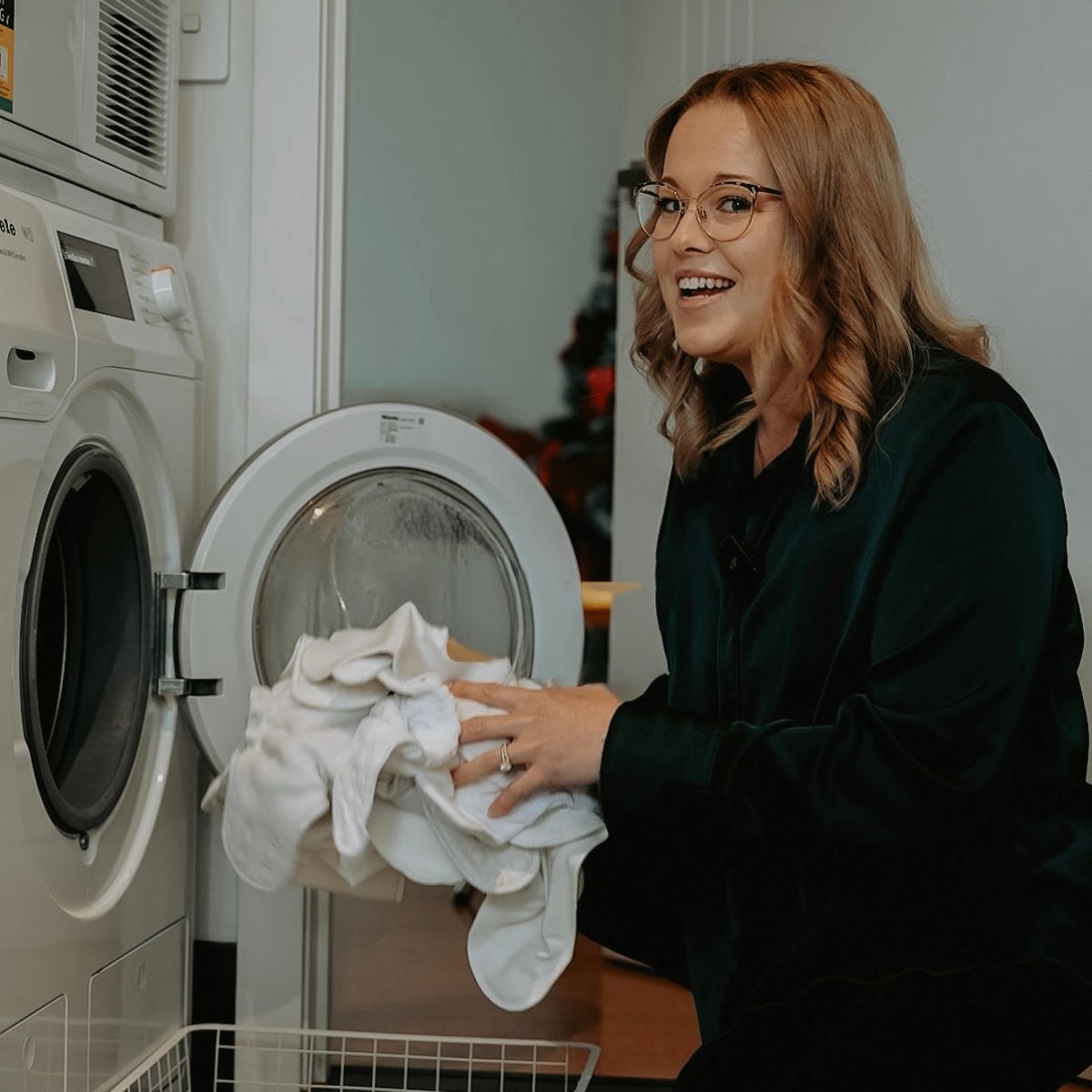
Your Mimi® nappies come out of the wash looking clean. Then the first wee hits and the smell is back. Or you notice red marks on your baby's bum, leaks from a nappy that fit perfectly last month, or inserts that feel stiff and slow to absorb.
Nine times out of ten, the nappy isn't the problem. The detergent is.
We've helped more than 50,000 Australian families wash cloth nappies. Three detergents come up again and again when those families write in with stink, rash or leak problems: Pigeon Baby Laundry Detergent, homemade detergent and ecostore laundry liquid.
None of these are bad products for everyday clothes. They just aren't built for the job a cloth nappy wash has to do. Below, we explain what a nappy detergent actually needs, and why these three fall short.
Short on time? Search your detergent in our free Cloth Nappy Detergent Index. It checks for enzymes and surfactants and gives you the right dose and wash temperature for your prewash and main wash.
Why cloth nappies need a different kind of clean
A load of t-shirts carries a bit of sweat and body oil. A load of nappies carries urine, poo, breastmilk or formula residue, nappy cream and skin cells, all soaked deep into thirsty bamboo and cotton inserts.
That mix is mostly protein, fat and starch. If your detergent can't break those down, a little stays behind after every wash. It builds up over weeks until you get:
- Ammonia smell. Bacteria feed on leftover urine residue and release that sharp, eye-watering smell as soon as the nappy gets wet.
- Rashes. Ammonia and trapped bacteria sit right against your baby's skin.
- Repelling and leaks. Residue coats the fibres so liquid runs off instead of soaking in.
- Stiff, grey or stained inserts.
So what separates a good nappy detergent from a poor one? It comes down to a few key ingredients.
What makes a good cloth nappy detergent?
1. Enzymes: the non-negotiable
Enzymes are proteins that break down specific types of soil into small pieces that rinse away. Each one has its own job:
| Enzyme | What it breaks down | Why it matters for nappies |
|---|---|---|
| Protease | Proteins | Poo, breastmilk, formula, skin cells. This is the most important enzyme for nappies. |
| Amylase | Starches | Poo once solids start (think porridge, potato, pumpkin) |
| Lipase | Fats and oils | Nappy creams, barrier balms, breastmilk fat |
| Mannanase | Food gums | Baby food, yoghurt, fruit purees |
| Pectate lyase | Pectin | Banana, berries and avocado stains |
| Cellulase | Loose cellulose fibres | Keeps cotton and bamboo feeling softer and looking brighter |
Without enzymes, your detergent can only lift soil off the surface. The protein and fat trapped inside the fibres stay put, wash after wash.
"But aren't enzymes harsh on sensitive skin?" This is one of the biggest myths in baby laundry. Most skin reactions to laundry detergent come from fragrance, not enzymes. Enzymes are biodegradable proteins that rinse away in the wash. Fragrance compounds are designed to stay on fabric. An enzyme-free detergent sold as "gentle" can actually leave more residue in your nappies over time, which is the very thing that causes irritation and ammonia.
Temperature matters too. Most laundry enzymes work best between 40 and 60°C. We recommend washing everyday nappies at 40 to 60°C, and night nappies at 60°C minimum, because heavily soiled natural fibres need the heat.
2. Surfactants: the cleaning muscle
Surfactants (short for "surface active agents") are the core cleaning ingredient in every detergent. One end of the molecule grabs onto water and the other grabs onto oil and dirt. They loosen soil from the fibre and hold it in the water so it rinses away instead of landing back on the fabric.
There are four main types:
- Anionic (for example, LAS or sodium coco sulphate). These are strong cleaners and great at lifting particle soil and body oils. Most powerful nappy detergents rely on them.
- Non-ionic (for example, alcohol ethoxylates or glucosides). These are good on oily soil, work well in hard water and are often paired with anionics.
- Amphoteric (for example, betaines or sultaines). These are mild and are usually used as co-surfactants to boost foam and reduce harshness.
- Cationic (for example, benzalkonium chloride and other "quats"). These carry a positive charge and are attracted to fabric, which is why they're the active ingredient in most fabric softeners. They don't clean well, and they're the last thing you want sitting in an absorbent insert.
What you want: a detergent with a proper blend of anionic and non-ionic surfactants at a dose strong enough for heavy soiling. Mild, low-foam surfactant systems that suit silk or merino usually can't handle a full load of nappies.
3. Water softeners (builders)
Australian water hardness varies a lot from town to town. Calcium and magnesium in hard water tie up surfactants and stop them working. Builders such as sodium citrate, sodium carbonate, zeolite and GLDA (tetrasodium glutamate diacetate) lock those minerals away so the rest of the detergent can do its job.
4. Oxygen bleach (a bonus, not a must)
Sodium percarbonate releases oxygen in warm water, which helps with stains, brightening and odour. It's a great extra, especially in a powder, but it can't replace enzymes.
What to avoid in a nappy detergent
- Fabric softener, or any detergent "with softener", that relies on cationic surfactants. These coat fibres and cause repelling.
- Soap (soap flakes, laundry soap bars). Soap reacts with minerals in water to form scum that clings to fibres.
- Heavy fragrance and essential oils, which are a common skin irritant and add to build-up.
- Enzyme-free formulas, no matter how green the packaging looks.
With that checklist in mind, here's where our three culprits fall down.
Worst detergent #1: Pigeon Baby Laundry Detergent
Pigeon is a trusted name in bottles and baby care, and its laundry liquid is sold in almost every major Australian retailer. That's exactly why so many new cloth nappy parents reach for it.
Why it lets cloth nappies down:
- No enzymes. Pigeon markets its current Australian liquid as enzyme-free. For baby clothes with the odd milk spill, that's manageable. For nappies full of protein and fat, it means the soil that causes ammonia never gets broken down.
- A cationic antibacterial. The current ingredient list on major Australian retailer listings includes benzalkonium chloride, a quaternary ammonium compound. It kills bacteria, but it belongs to the same family of positively charged ingredients used in fabric softeners, and ingredients in this family are drawn to fibre. Killing bacteria also isn't the same as removing the residue those bacteria feed on.
- Fragrance. It contains added fragrance, which is the most common cause of detergent-related skin irritation.
- A light dose for heavy soiling. The label dose is 10 to 20 mL depending on water volume. That's designed for lightly soiled baby clothes, not a full load of used nappies.
Please note: Different Australian retailers list different Pigeon ingredient lists (one older version lists SLES and DMDM hydantoin), so check the bottle in your hand.
The verdict: Pigeon is fine for bibs and onesies, but it's the wrong tool for cloth nappies.
Worst detergent #2: Homemade detergent
We love the spirit of homemade detergent. It's cheap, it feels natural, and it fits the low-waste lifestyle that brings so many families to cloth. Unfortunately it's also the fastest route to stinky, repelling nappies that we see.
Most homemade recipes combine soap flakes or grated laundry soap, washing soda and borax, sometimes with a few drops of essential oil.
Why it lets cloth nappies down:
- Soap is not detergent. Soap reacts with the calcium and magnesium in your water and forms insoluble "soap scum" (the same stuff that builds up on a shower screen). In a nappy wash, that scum coats the fibres of your inserts. Over time it traps residue and bacteria and stops absorbency, which leads to leaks and ammonia.
- No enzymes at all. No homemade recipe can give you protease, amylase or lipase, so protein and fat build up with every wash.
- No real surfactant system. Soap is the only cleaning agent, and hard water knocks it out quickly.
- Harsh on the parts that matter. Washing soda is strongly alkaline. At high doses, every wash, it's tough on elastics and waterproof layers over the long run.
- Borax isn't as harmless as it sounds. Borax is classed as a reproductive toxicant under European chemical rules. That's worth knowing before you bulk-mix it at home, especially around little ones.
- No consistency. Every batch is different, so it's hard to troubleshoot when something goes wrong.
The verdict: Homemade detergent costs cents per wash but can cost you an entire nappy stash. Save the DIY energy for cloth wipes and wet bags.
Worst detergent #3: ecostore Laundry Liquid
ecostore is a well-loved New Zealand brand with genuine environmental credentials, and its Ultra Sensitive liquid is approved by Sensitive Choice. Parents understandably assume "sensitive + eco" equals "perfect for nappies". Sadly, that isn't the case.
Why it lets cloth nappies down:
- No enzymes in the standard range. ecostore states that its standard laundry range is enzyme-free. That includes the popular Ultra Sensitive and Eucalyptus laundry liquids. As we covered above, "enzyme-free" doesn't make a detergent gentler on nappies. It just means residue stays behind.
- A mild surfactant system. The main surfactants are glucosides (a gentle non-ionic family) plus sodium coco sulphate. That works for everyday clothes, but a full nappy load demands more.
- Essential oil fragrance in scented versions. The Eucalyptus liquid contains eucalyptus oil and limonene. Natural fragrance is still fragrance, and it's still a common skin sensitiser.
To be fair to ecostore: the brand does make a separate "Ultra Power" range that contains enzymes. If you love the brand, check the enzyme list on that range in our Detergent Index before you switch, rather than using the standard liquid on your nappies.
The verdict: ecostore's standard liquid is great for the planet but not strong enough for poo.
So what should you use?
Look for a detergent that ticks these boxes:
- ✅ Contains enzymes, ideally three or more (protease, amylase and lipase at a minimum)
- ✅ Has a strong surfactant blend, anionic plus non-ionic
- ✅ Includes water softeners, especially if your water is hard
- ✅ Has no fabric softener or soap
- ✅ Is fragrance-free or low fragrance, if your baby has sensitive skin
- ✅ Is dosed for heavy soiling, not just the "normal" line on the box
Plenty of affordable Australian detergents meet this standard. Some of our go-to picks in the Detergent Index include OMO Active Clean Powder, Aldi Almat Laundry Powder and Biozet Attack Regular Powder. For sensitive skin, we recommend b clean co BABY Eco Laundry Detergent, which has four enzymes, a built-in oxygen booster, no fragrance and no SLS, and is made in Australia. You'll find it in our laundry collection.
Check your detergent in 10 seconds
Our free Cloth Nappy Detergent Index covers the most common detergents on Australian shelves. Search your brand and you'll see:
- whether it contains enzymes, and how many
- which surfactants it uses
- the right dose for your prewash and main wash
- the right wash temperature
- a clear Recommended, Use with caution or Not recommended verdict
You can also filter by fragrance-free, powder or liquid, budget and eco options that still contain enzymes.
Can't find yours? Use the request form on the page and we'll research it and add it, usually within a few days.
Already using one of these? Here's how to fix it
If your nappies are showing signs of build-up (ammonia smell, repelling, stiffness), switching detergent is step one. Then:
- Switch to an enzyme detergent from the "Recommended" list in our index.
- Dose for heavy soiling. Use the "heavy" line on the pack, not the "normal" one.
- Run a proper prewash with a small dose of detergent to flush the worst of the soil.
- Main wash hot and long. Use 40 to 60°C for day nappies and 60°C for night nappies, on the longest cycle your machine offers.
- Load the machine properly. Aim for about two-thirds to three-quarters full so the nappies rub against each other.
- Give it a few weeks. Build-up takes time to clear. If the smell or repelling hasn't improved after two to three weeks of a solid routine, contact our team and we'll troubleshoot with you.
For the full step-by-step routine, read our guide on how to wash cloth nappies.
Frequently asked questions
What is the worst detergent for cloth nappies?
The worst detergents for cloth nappies are those with no enzymes, soap-based formulas, or added fabric softener. Pigeon Baby Laundry Detergent, homemade soap-based detergent and ecostore's standard laundry liquid are three common examples we see cause problems in Australian homes.
Do cloth nappies need enzyme detergent?
Yes. Enzymes break down the proteins, fats and starches in wee, poo, milk and nappy cream. Without them, residue builds up in the fibres, which leads to ammonia, rashes and leaks.
Are enzymes safe for babies with sensitive skin?
For most babies, yes. Enzymes rinse out in the wash. Fragrance is a far more common cause of detergent-related skin irritation. If your baby has sensitive skin, choose a fragrance-free enzyme detergent.
Can I use homemade detergent on cloth nappies?
We don't recommend it. Soap-based homemade detergents react with minerals in water and leave scum on the fibres. They also contain no enzymes, which leads to build-up, ammonia smell and repelling.
Can I use eco or plant-based detergent on cloth nappies?
Yes, as long as it still contains enzymes. Many eco detergents remove enzymes for marketing reasons. The eco filter in our Detergent Index only shows plant-based options that still contain enzymes.
Why do my cloth nappies smell of ammonia straight out of the wash?
Usually because residue is left behind from an enzyme-free detergent, too little detergent, a wash that's too cool, or an overloaded machine. Start by checking your detergent in our index.
Ingredient information in this article comes from manufacturer websites and Australian retailer listings as at September 2026. Formulas change, so always check the label on your pack. This article reflects Mimi & Co's view of suitability for cloth nappies specifically. It isn't a comment on these products' performance on general laundry.

Leave a comment
All comments are moderated before being published.
This site is protected by hCaptcha and the hCaptcha Privacy Policy and Terms of Service apply.