
![Swim Nappy Bundle [Ship Oct 5 - 10] - Mimi & Co](http://mimiandco.com.au/cdn/shop/files/swim-nappy-bundle-ship-oct-5-10-5796576.jpg?v=1770171125)

![Toilet Training Undies Pants [Jan Preorder] - Mimi & Co](http://mimiandco.com.au/cdn/shop/files/toilet-training-undies-pants-jan-preorder-6316642.jpg?v=1766216229&width=1200)


![Reusable Bamboo Mimi™ Wipes [5 Pack] - Mimi & Co](http://mimiandco.com.au/cdn/shop/files/reusable-bamboo-mimi-wipes-5-pack-7600782.jpg?v=1773649075)


![Reusable Mimi® Menstrual Underwear [Shipping 31/9] - Mimi & Co](http://mimiandco.com.au/cdn/shop/files/reusable-mimi-menstrual-underwear-shipping-319-6508918.png?v=1776734572)



![Toilet Training Undies Pants 2.0 | Baby Duck [Ships September] - Mimi & Co](http://mimiandco.com.au/cdn/shop/files/toilet-training-undies-pants-20-baby-duck-ships-september-9296055.png?v=1784808614&width=104)




![Travel Bamboo Change Mat [Ships March 14th] - Mimi & Co](http://mimiandco.com.au/cdn/shop/files/travel-bamboo-change-mat-ships-march-14th-1490896.jpg?v=1769606287&width=104)


![Reusable Bamboo Mimi™ Wipes [10 Pack] - Mimi & Co](http://mimiandco.com.au/cdn/shop/files/reusable-bamboo-mimi-wipes-10-pack-2507756.jpg?v=1773666247&width=104)

If you've ever looked at a cloth nappy and wondered how a few layers of fabric can hold a full wee, or why cloth nappies fit so differently to disposables, this one's for you. With a forensic science background and 16 years working with textiles, I find this stuff genuinely fascinating, so grab a cuppa and let's nerd out.
Disposables and cloth absorb in completely different ways
A disposable nappy relies on a super absorbent polymer (SAP): tiny crystals of gel that swell up and lock liquid away. Because the gel can hold many times its own weight in liquid, a disposable can stay very thin while dry and only puffs up as it fills.
A cloth nappy has no gel. Its absorbency comes from fabric, which means the absorbency is a physical layer of material that's there whether the nappy is wet or dry. That one difference explains almost everything about how cloth nappies look, feel and fit.
Why natural fibres love water
Our inserts are made predominantly from plant-based fibres like bamboo, cotton and hemp. These fibres are made mostly of cellulose, a molecule covered in tiny chemical groups that attract water molecules and bond to them. In science terms, they're hydrophilic: water loving.
That's why a bamboo insert soaks up wee instead of letting it bead on the surface the way a raincoat would.
Capillary action: the paper towel effect
Fabric isn't solid. It's a network of yarns, and each yarn is made of thousands of fibres with tiny gaps between them. When liquid touches those gaps, it gets pulled in and spreads through the fabric on its own. This is called capillary action, and it's the same reason a paper towel draws up a spill, or a plant pulls water up from its roots.
Capillary action is what moves wee away from the point where it lands and spreads it through the insert, so the whole insert gets to work rather than just one spot.
Speed versus capacity
Not all fibres behave the same. Some absorb quickly, others absorb slowly but hold a lot. Bamboo and cotton take in liquid fast. Hemp is slower to absorb but has excellent capacity once it gets going.
This is why layering matters. Put a fast absorbing layer where the wee lands first, and a slower, high capacity layer underneath, and you get the best of both: wee is caught quickly and then stored. It's also why two slow absorbing layers stacked together can leak for babies who wee fast, even when the inserts aren't full.
For reference, our snake insert holds around 160ml, our bamboo cotton hourglass booster around 80ml, and our Supersoaker Maxi around 300ml.
The stay dry layer: a one way street
A stay dry layer sits between your baby's skin and the insert. Instead of holding onto liquid, it's designed to let wee pass quickly through to the absorbent insert underneath, so the surface against your baby's skin feels drier than the insert below it.
Why contact matters: the case for a snug fit
Here's where physics meets fit. Capillary action only starts when liquid touches the fabric. If there's a gap between your baby and the insert, wee can travel along the surface or pool before it soaks in, and that's when it finds its way out.
When the insert sits close to where the wee lands, liquid soaks straight in. It's drawn away from the skin quickly, spread through the insert and stored. Close contact means faster absorption, a drier baby and fewer leaks.
The wet zone: absorbency goes where the wee goes
Because cloth absorbency is a physical layer of fabric, it has to sit exactly where your baby wees. For boys, that's the front and through the crotch. For girls, it's lower and more central. That's why our inserts are designed so you can fold and position the absorbency where your baby needs it most.
It also means the fullest part of a cloth nappy will always be between the legs. That's not a fit problem; that's the absorbency doing its job in the right place.
Leg elastics: the seal
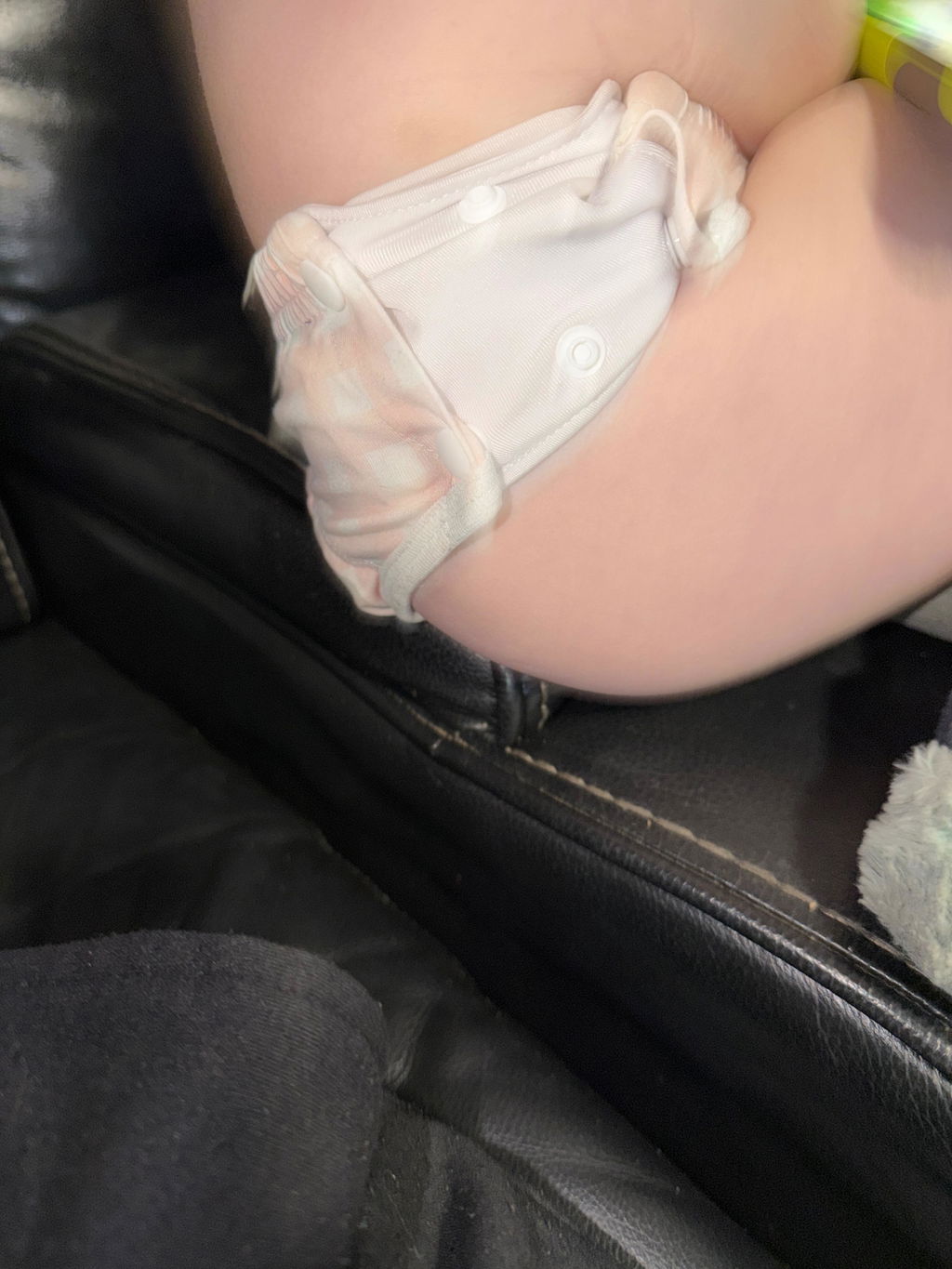
The leg elastics act like a gasket. Sitting snugly in your baby's leg crease (where a pair of undies would sit), they close the gap between nappy and skin so any wee that hasn't absorbed yet has nowhere to escape. If the elastic sits on the soft part of the thigh instead, it leaves a channel for wee to run out.
More absorbency means more fabric
This is simple volume. Every insert you add is extra fabric in the same space between your baby's legs. Our snake insert and booster together are our maximum absorbency setup, designed for toddlers and longer stretches like naps on our 2.0 nappies. On a smaller baby, that setup will sit noticeably fuller - and dedicated night nappies even more so!
It's a trade off every cloth nappy has: more absorbency, more bulk. The key is matching your rise and waist snaps to how much insert is inside, so there's room for the fabric without the nappy being pulled tight. For younger babies, a single insert with slightly more frequent changes usually gives a slimmer fit.
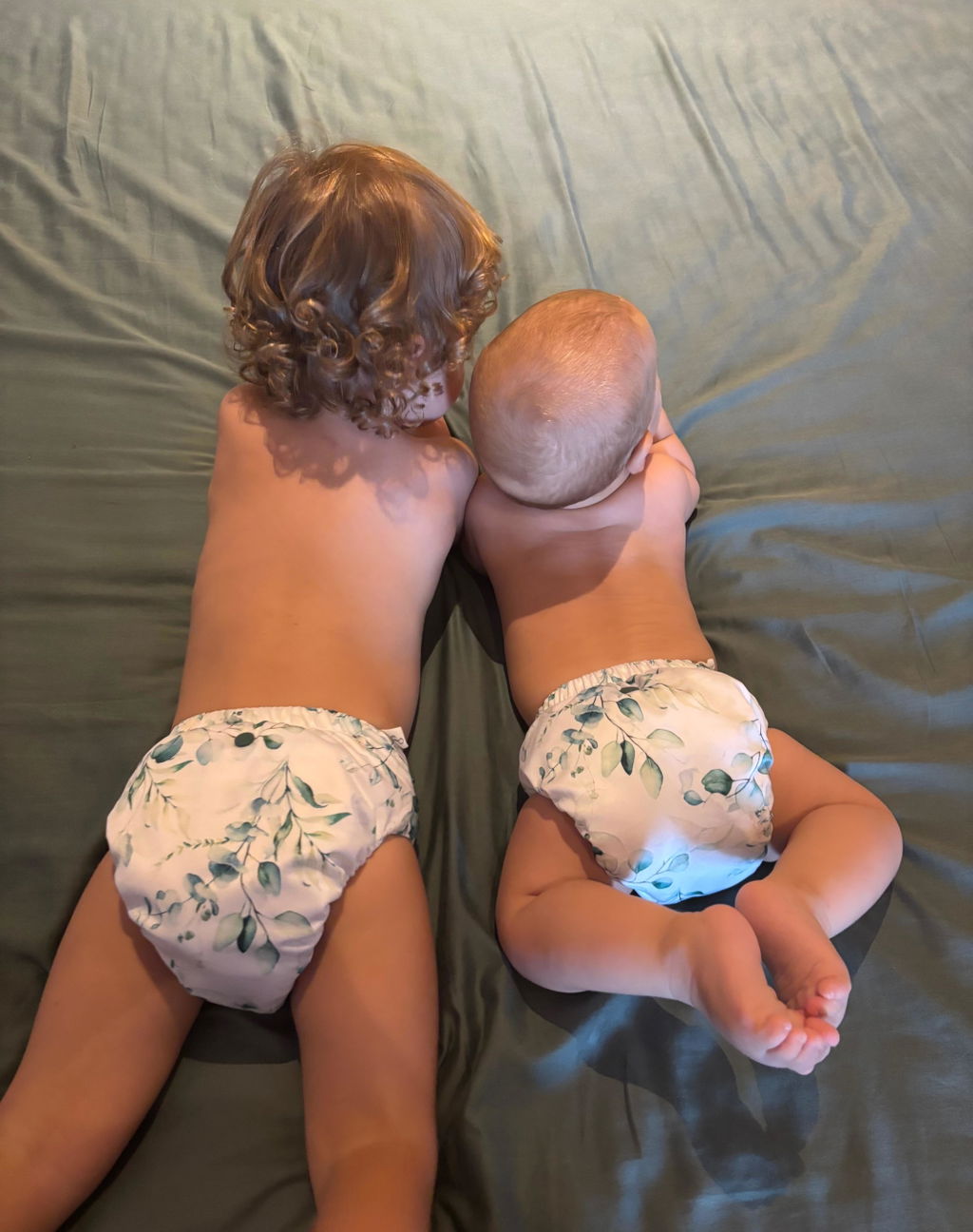
A snug nappy is the secret to a leak free fit
A snug nappy keeps fabric in contact with your baby. Think of a full sponge: press it and the water comes out. The same thing happens to a wet insert under pressure from a tight onesie, a firm car seat strap or an overstuffed nappy.
These are called compression leaks, and they're a sign something is pressing on the nappy, not that it's too small.
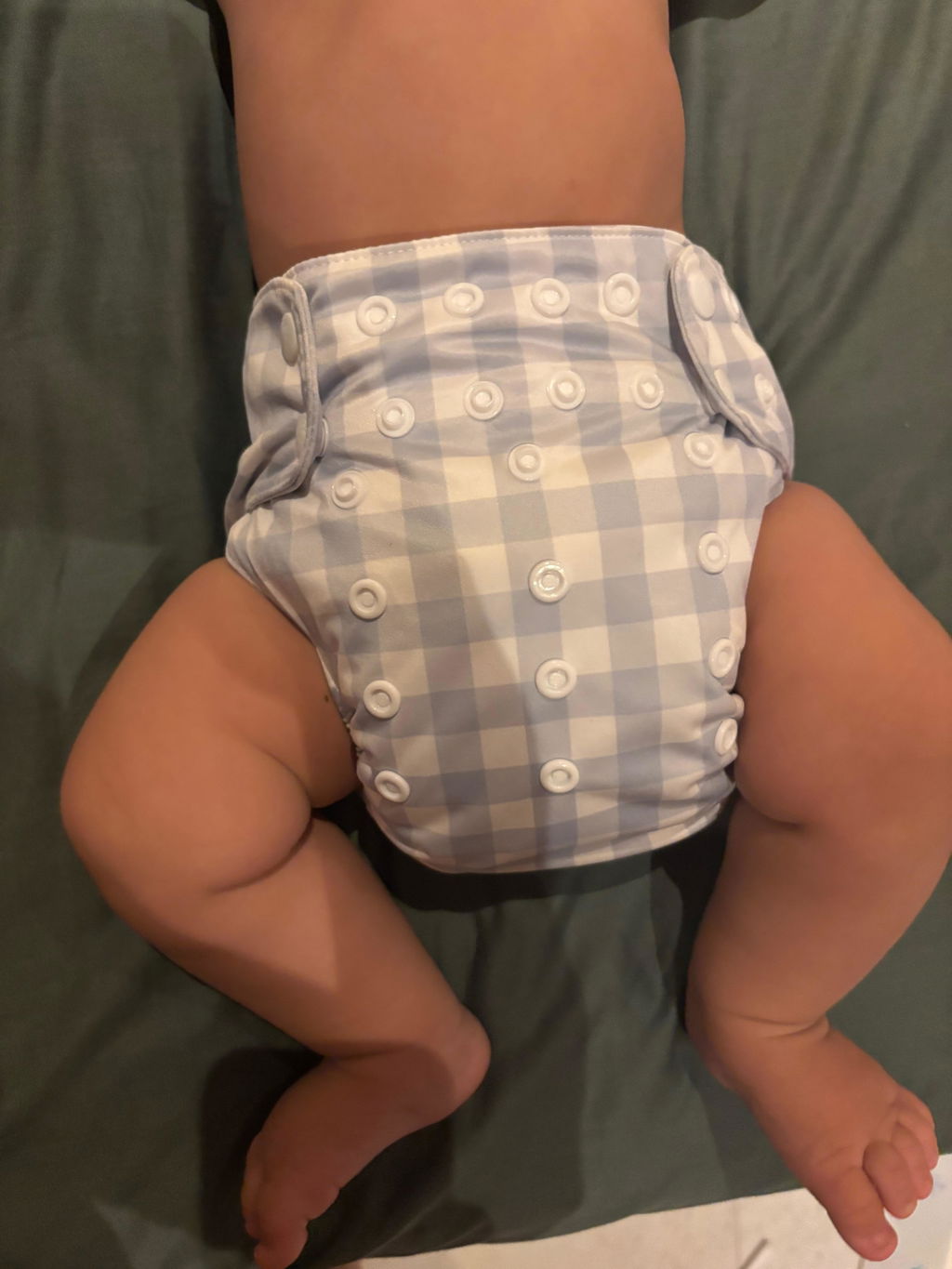
Signs of a good fit:
- You can slide two fingers comfortably under the waist.
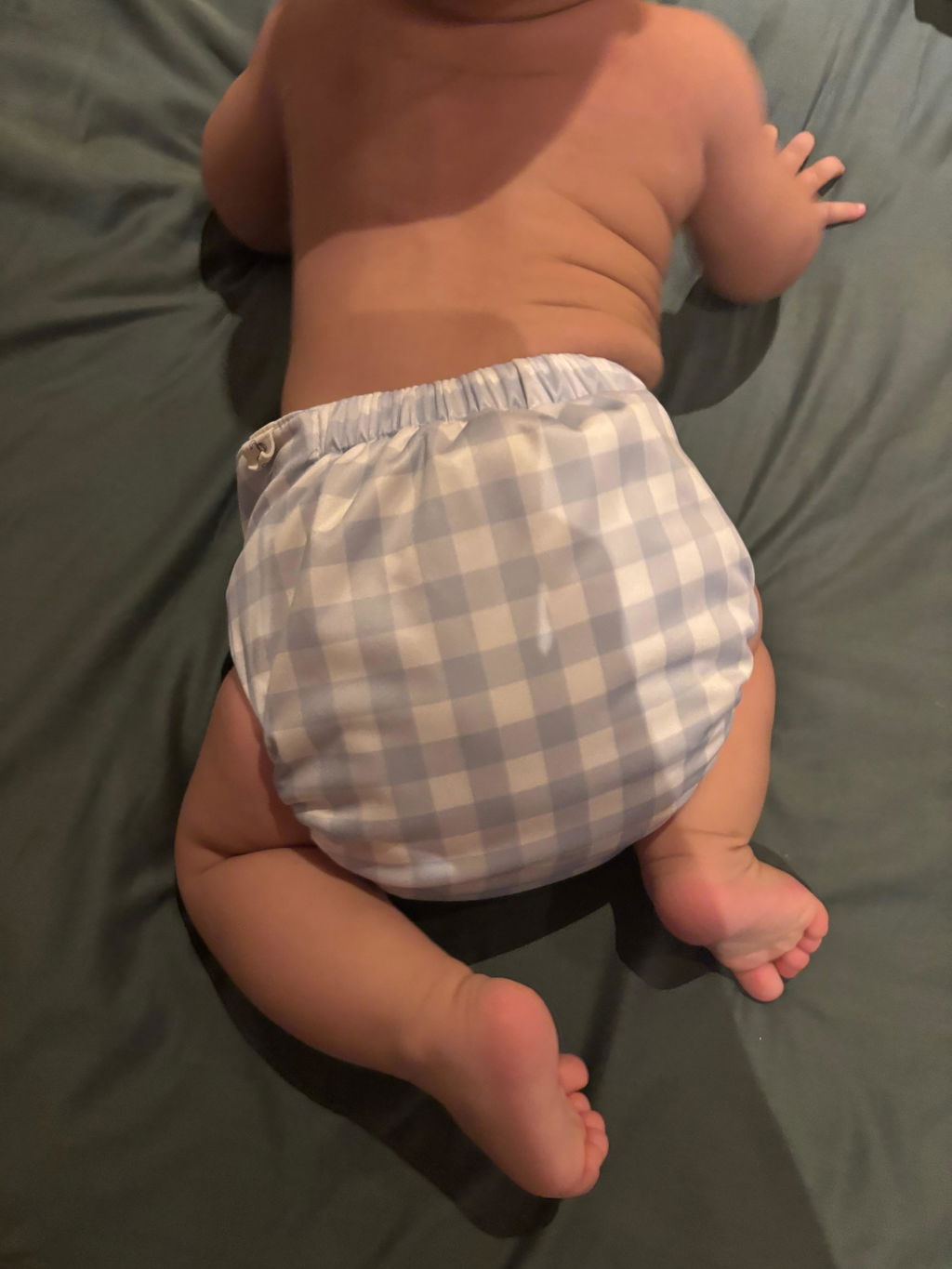
- The leg elastics sit in the leg crease with no gaps.
- No fabric from the insert is poking outside the waterproof shell, where it can wick wee onto clothes.
- Any light marks look like the ones socks or fitted undies leave, and fade soon after the nappy comes off.
Marks that break the skin or are still there hours later mean the fit needs adjusting, so loosen the waist and check the leg elastic position.
Reading your inserts like a scientist
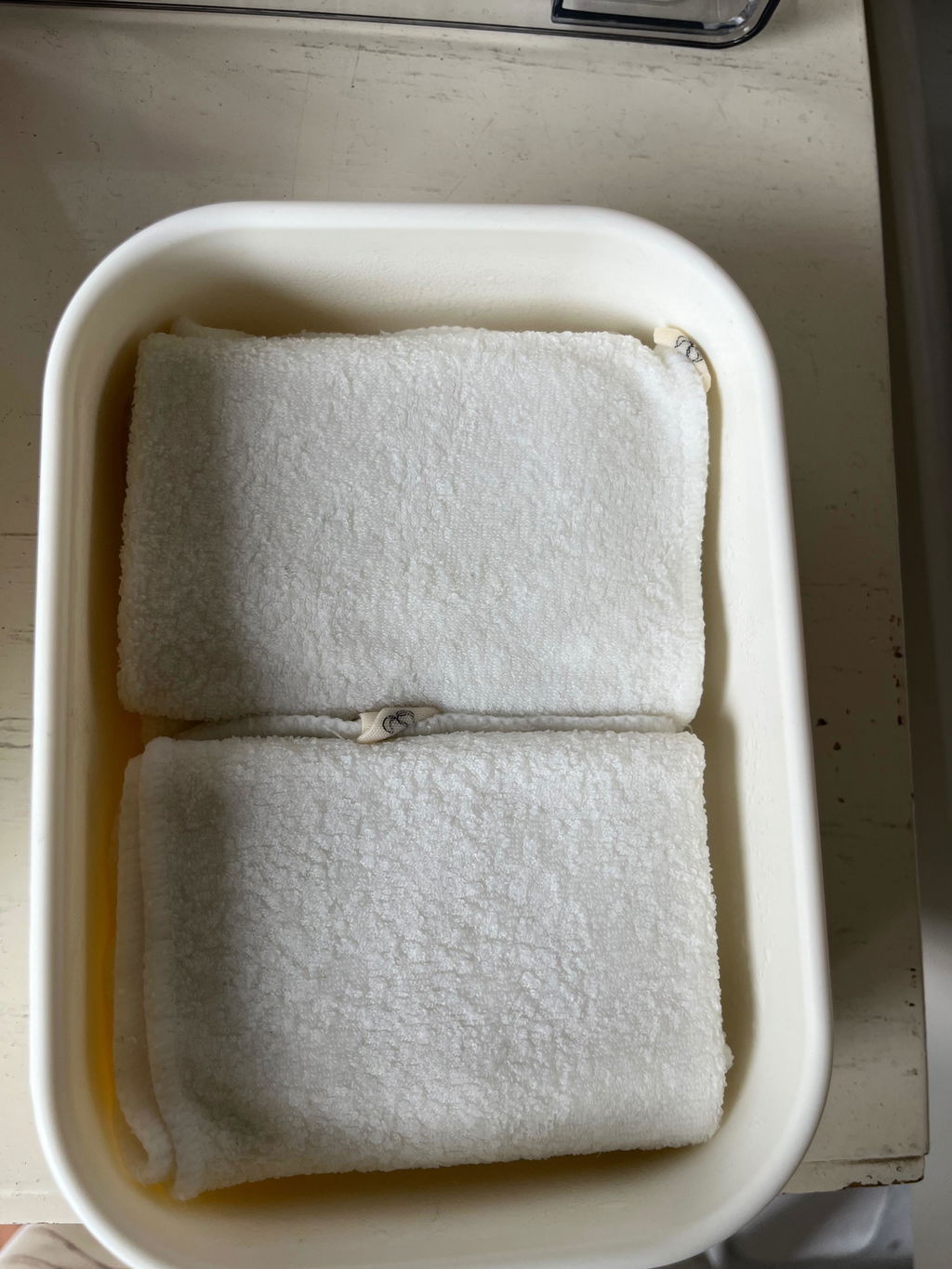
When a nappy leaks, the insert tells you why:
- Fully saturated: you've run out of capacity. Add absorbency or change a little sooner.
- Dry spots or only wet in one area: wee isn't reaching all of the insert. Check the fit, insert position, and whether your absorbency is in the wet zone.
- Wet on the surface but not soaking in: your inserts may be repelling, often from cream or detergent build up. A wash routine check is the next step.
The bottom line
A cloth nappy is a small piece of engineering: water loving fibres, capillary action, a stay dry layer and an elastic seal, all working together.
Get the fabric in contact with the wet zone and the seal in the leg crease, and the physics takes care of the rest.
Want help getting it just right? Check out our fitting guide, or send our team a photo and we'll help you troubleshoot.


Leave a comment
All comments are moderated before being published.
This site is protected by hCaptcha and the hCaptcha Privacy Policy and Terms of Service apply.