
![Swim Nappy Bundle [Ship Oct 5 - 10] - Mimi & Co](http://mimiandco.com.au/cdn/shop/files/swim-nappy-bundle-ship-oct-5-10-5796576.jpg?v=1770171125)

![Toilet Training Undies Pants [Jan Preorder] - Mimi & Co](http://mimiandco.com.au/cdn/shop/files/toilet-training-undies-pants-jan-preorder-6316642.jpg?v=1766216229&width=1200)


![Reusable Bamboo Mimi™ Wipes [5 Pack] - Mimi & Co](http://mimiandco.com.au/cdn/shop/files/reusable-bamboo-mimi-wipes-5-pack-7600782.jpg?v=1773649075)



![Reusable Mimi® Menstrual Underwear [Shipping 31/9] - Mimi & Co](http://mimiandco.com.au/cdn/shop/files/reusable-mimi-menstrual-underwear-shipping-319-6508918.png?v=1776734572)



![Toilet Training Undies Pants 2.0 | Baby Duck [Ships September] - Mimi & Co](http://mimiandco.com.au/cdn/shop/files/toilet-training-undies-pants-20-baby-duck-ships-september-9296055.png?v=1784808614&width=104)




![Travel Bamboo Change Mat [Ships March 14th] - Mimi & Co](http://mimiandco.com.au/cdn/shop/files/travel-bamboo-change-mat-ships-march-14th-1490896.jpg?v=1769606287&width=104)


![Reusable Bamboo Mimi™ Wipes [10 Pack] - Mimi & Co](http://mimiandco.com.au/cdn/shop/files/reusable-bamboo-mimi-wipes-10-pack-2507756.jpg?v=1773666247&width=104)



Nappy rash happens to almost every baby at some point, whether they wear cloth or disposables. So it's no surprise that one of the most common questions we get from cloth nappy families is: can I still use nappy cream?
The short answer is yes. You just need to be choosy about which cream you use, and how you use it.
At Mimi & Co, we've helped more than 50,000 Australian families make the switch to cloth. Here's what we've learned about keeping little bottoms comfortable without ruining your nappies.
The quick version
- Avoid zinc-based nappy creams where you can. Zinc deposits onto nappy fabric, builds up over time and can stop your nappies absorbing properly.
- If you need a zinc cream, always use a disposable liner. The liner catches the cream so it never touches your inserts.
- Choose a zinc-free, cloth-friendly balm for everyday use, and apply a thin layer only.
Why zinc nappy creams and cloth nappies don't mix
Most traditional nappy rash creams use zinc oxide as their main ingredient. Zinc works well on skin because it forms a thick, water-resistant barrier. That same barrier is exactly what causes trouble in a cloth nappy.
Here's what happens when zinc cream meets cloth:
- It deposits onto the fabric. Zinc oxide doesn't dissolve in water, so a regular wash won't fully remove it. Each use leaves a little more behind.
- It builds up over time. Those layers coat the fibres of your inserts and the stay-dry lining of your nappies.
- It causes repelling. Once fibres are coated, wee beads up and rolls off instead of soaking in. This is called repelling, and it shows up as leaks, even from a nappy that isn't full.
- It can stain. Zinc creams often leave white or greyish marks that are hard to shift.
The frustrating part is that repelling builds slowly. Many parents don't connect their leaks to the cream they started using weeks earlier, and assume the nappy has stopped working.
What to look for in a cloth-friendly nappy cream
For everyday protection, a zinc-free balm is the easiest choice for cloth nappy families. When you're reading labels, look for:
- No zinc oxide in the ingredients list. Check the active ingredients and the full list, as zinc sometimes appears further down.
- "Cloth nappy safe" or "cloth friendly" on the label. This is a helpful starting point, but still check the ingredients.
- Light, absorbable textures. Balms that soak into skin leave less residue behind on fabric than thick, pasty creams.
- Simple ingredient lists. Fewer ingredients make it easier to spot anything that might cause build-up.
Even with a cloth-friendly balm, a thin layer is all you need. Anything heavy enough to leave a visible film on your baby's skin will also leave a film on your nappy.
Not sure whether your cream is affecting your nappies? Try the water test: drip a little water onto a clean, dry insert. If it soaks in straight away, you're fine. If it beads up or sits on the surface, you have build-up.
Need a zinc cream? Use a disposable liner
Sometimes a zinc cream is the right call. Your GP or child health nurse may recommend one for a stubborn rash, or it may simply be the cream that works best for your baby's skin. That's completely fine. You don't need to switch to disposables to use it.
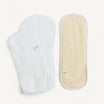
The solution is a disposable nappy liner. A liner is a thin, soft sheet that sits between your baby's skin and the nappy. It catches the cream (and makes poo clean-up easier too) so the zinc never reaches your inserts.
To use a liner with zinc cream:
- Apply the cream to clean, dry skin.
- Lay a disposable liner flat on top of the nappy, covering the whole area that touches your baby's bottom.
- Fasten the nappy as usual and check the liner hasn't bunched up at the edges.
- At change time, put the used liner in the bin.
We recommend binning liners even if the packet says flushable. Many "flushable" liners don't break down quickly enough and can block pipes and septic systems.
One tip: a liner only protects the part of the nappy it covers. If cream is getting onto the leg elastics or edges, use a slightly larger liner or apply the cream a little more sparingly.
How to apply nappy cream with cloth nappies
A few small habits make a big difference to how well your nappies hold up:
- Start with clean, dry skin. Pat dry after wiping, or give your baby a few minutes of nappy-free time.
- Use a thin layer. You should barely see it once it's on. More cream doesn't mean more protection.
- Let it absorb for a moment before putting the nappy on, if your baby will let you.
- Add a liner if you're using a zinc cream, or a thick cream you're unsure about.
- Wash your hands before handling clean nappies, so cream doesn't transfer onto fresh inserts.
Preventing nappy rash in cloth nappies
The best nappy cream is the one you rarely need. These habits help keep rash away in the first place:
- Change often. Every two to three hours during the day, and straight away after a poo.
- Give nappy-free time. Fresh air on the skin is one of the simplest ways to settle irritation.
- Check your wash routine. Detergent that isn't rinsing out, or ammonia build-up from a wash that isn't getting nappies clean, can both irritate skin. A strong ammonia smell when your baby wees is a sign your routine needs a tweak.
- Get the fit right. A well-fitted nappy keeps wetness where it belongs and reduces rubbing around the legs and waist.
- Use enough absorbency. If inserts are soaked through at change time, add a booster or change a little sooner.
When to see a doctor: if a rash doesn't improve after a few days, spreads, blisters, looks bright red with spots around the edges (which can be thrush), or your baby seems unwell, see your GP or child health nurse.
Already got cream on your nappies? Here's how to fix it
Don't panic. Cream build-up is very common, and in most cases you can get your nappies absorbing again.
- Do the water test on the affected inserts so you know which ones need attention.
- Scrub the area with a few drops of plain dishwashing liquid and an old toothbrush. Dishwashing liquid is designed to break down grease, which helps lift the cream.
- Rinse well in warm water until no suds remain.
- Wash as normal with your regular detergent. Inserts and anything without TPU or elastics can go through a hot cotton cycle. Keep shells on your usual temperature to protect the waterproof layer and elastics.
- Water test again. Stubborn build-up may need a second round.
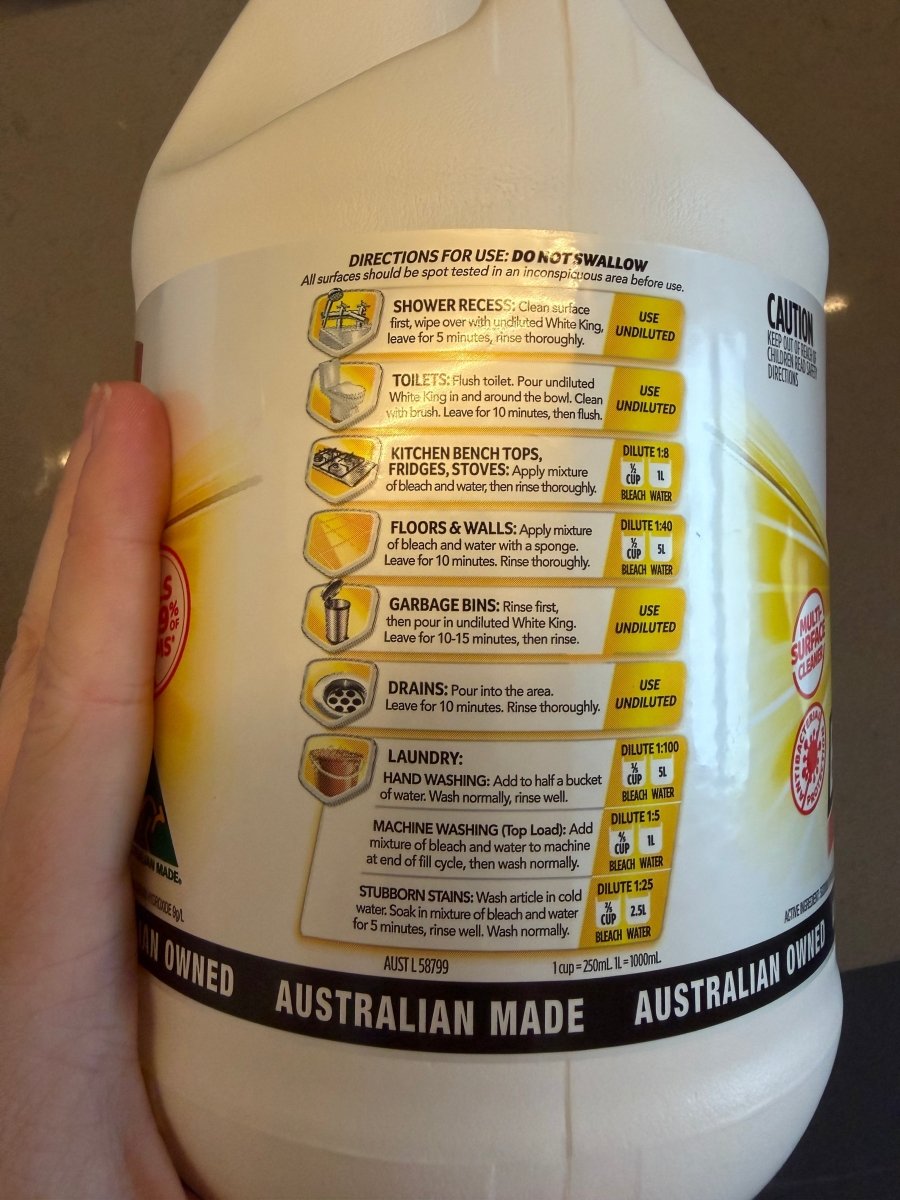
Please don't reach for bleach to fix build-up. It won't remove zinc, and we don't recommend it for regular use on Mimi & Co nappies. If you're still having trouble, get in touch and our team will help you troubleshoot.
Frequently asked questions
Can I use Sudocrem with cloth nappies?
Sudocrem contains zinc oxide, so we don't recommend using it directly against cloth. If it's the cream that works for your baby, use a disposable liner every time.
Will one use of zinc cream ruin my nappies?
Unlikely. Build-up happens gradually. If you've used zinc cream without a liner once or twice, do a water test and scrub any affected inserts with dishwashing liquid before your next wash.
Do I need a liner with a cloth-safe balm?
Not usually. A liner is a good idea if you're applying a thick layer, using a new product you haven't tested, or simply want easier poo clean-up.
Why are my cloth nappies suddenly leaking?
If leaks start after you've begun using a new cream, build-up is a likely cause. Do the water test. If inserts/stay dry layer absorb normally, check the fit and absorbency next.
The bottom line
You don't have to choose between a comfortable baby and nappies that work. Stick to a zinc-free balm for everyday use, keep it to a thin layer, and when a zinc cream is needed, pop a disposable liner in first.
Have a question about your nappies or your wash routine? Our team has helped thousands of Australian families with exactly this, and we're always happy to help.
Shop Mimi® 2.0 Cloth Nappies | Ask Our Team a Question



![Heavy Wetter Night Nappy [Shipping 16/9] - Mimi & Co](http://mimiandco.com.au/cdn/shop/files/heavy-wetter-night-nappy-shipping-169-5280853.jpg?v=1773716296&width=1200)


![Reusable Bamboo Mimi™ Wipes [10 Pack] - Mimi & Co](http://mimiandco.com.au/cdn/shop/files/reusable-bamboo-mimi-wipes-10-pack-2507756.jpg?v=1773666247&width=1200)
![Reusable Bamboo Mimi™ Wipes [10 Pack] - Mimi & Co](http://mimiandco.com.au/cdn/shop/files/reusable-bamboo-mimi-wipes-10-pack-6981693.jpg?v=1773649075&width=1200)

![Toilet Training Undies Pants [Jan Preorder] - Mimi & Co](http://mimiandco.com.au/cdn/shop/files/toilet-training-undies-pants-jan-preorder-7565816.jpg?v=1768434349&width=1200)
![Toilet Training Undies Pants [Jan Preorder] - Mimi & Co](http://mimiandco.com.au/cdn/shop/files/toilet-training-undies-pants-jan-preorder-8758210.png?v=1768434161&width=1080)

![Organic Cotton Wipes [5 Pack] - Mimi & Co](http://mimiandco.com.au/cdn/shop/files/organic-cotton-wipes-5-pack-7079645.png?v=1759809401&width=1200)
![Organic Cotton Wipes [5 Pack] - Mimi & Co](http://mimiandco.com.au/cdn/shop/files/organic-cotton-wipes-5-pack-2990862.jpg?v=1759809401&width=1080)







Leave a comment
All comments are moderated before being published.
This site is protected by hCaptcha and the hCaptcha Privacy Policy and Terms of Service apply.