
![Swim Nappy Bundle [Ship Oct 5 - 10] - Mimi & Co](http://mimiandco.com.au/cdn/shop/files/swim-nappy-bundle-ship-oct-5-10-5796576.jpg?v=1770171125)

![Toilet Training Undies Pants [Jan Preorder] - Mimi & Co](http://mimiandco.com.au/cdn/shop/files/toilet-training-undies-pants-jan-preorder-6316642.jpg?v=1766216229&width=1200)


![Reusable Bamboo Mimi™ Wipes [5 Pack] - Mimi & Co](http://mimiandco.com.au/cdn/shop/files/reusable-bamboo-mimi-wipes-5-pack-7600782.jpg?v=1773649075)


![Reusable Mimi® Menstrual Underwear [Shipping 31/9] - Mimi & Co](http://mimiandco.com.au/cdn/shop/files/reusable-mimi-menstrual-underwear-shipping-319-6508918.png?v=1776734572)

![Toilet Training Undies Pants 2.0 | Baby Duck [Ships September] - Mimi & Co](http://mimiandco.com.au/cdn/shop/files/toilet-training-undies-pants-20-baby-duck-ships-september-9296055.png?v=1784808614&width=104)



![Travel Bamboo Change Mat [Ships March 14th] - Mimi & Co](http://mimiandco.com.au/cdn/shop/files/travel-bamboo-change-mat-ships-march-14th-1490896.jpg?v=1769606287&width=104)


![Reusable Bamboo Mimi™ Wipes [10 Pack] - Mimi & Co](http://mimiandco.com.au/cdn/shop/files/reusable-bamboo-mimi-wipes-10-pack-2507756.jpg?v=1773666247&width=104)
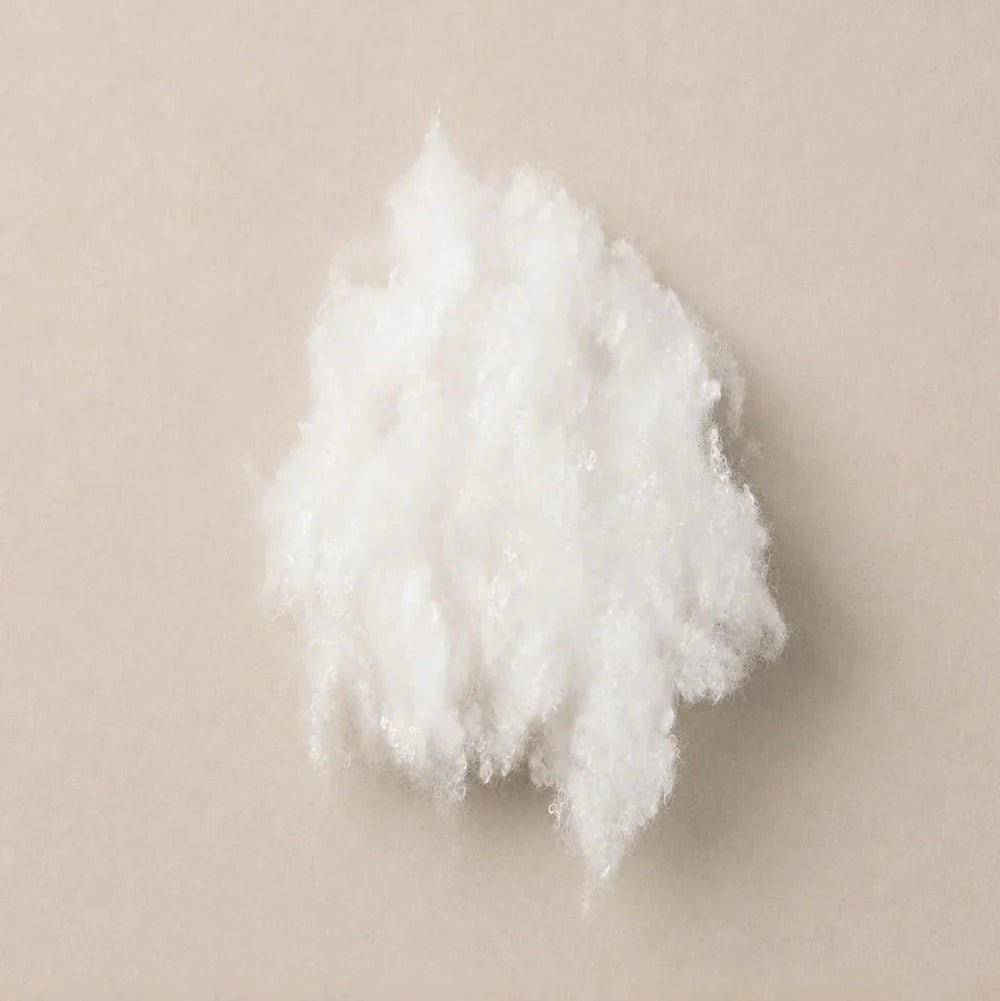
We know this might seem surprising coming from a sustainable baby brand. But we made this decision very deliberately, based on research into microplastics. Here is the honest story, explained as simply as we can.
First, what even are microplastics?
Imagine you are washing a fluffy fleece jacket. As it tumbles around in the machine, tiny plastic particles too small to see break off and wash down the drain. These are called microplastics.
They are so tiny that water treatment plants cannot catch them. They end up in rivers, oceans, and soil. Scientists have now found microplastics in places that would have seemed impossible just a few years ago: in the air we breathe, in drinking water, in seafood, in vegetables, and yes, inside the human body itself, including in blood, lungs, and even in breast milk and the placenta.
Microplastics have been detected in human breast milk, the placenta, and infant stool. We do not yet fully understand what this means for long-term health, but for a brand making products for babies, it matters deeply to us.
So what does this have to do with recycled polyester?
Recycled polyester, often called rPET, is made by melting down old plastic bottles and spinning them into fabric. On the surface this sounds amazing: less plastic in landfill, less new plastic being made. And for a single-use item like a shopping bag or a water bottle, it can be a great choice.
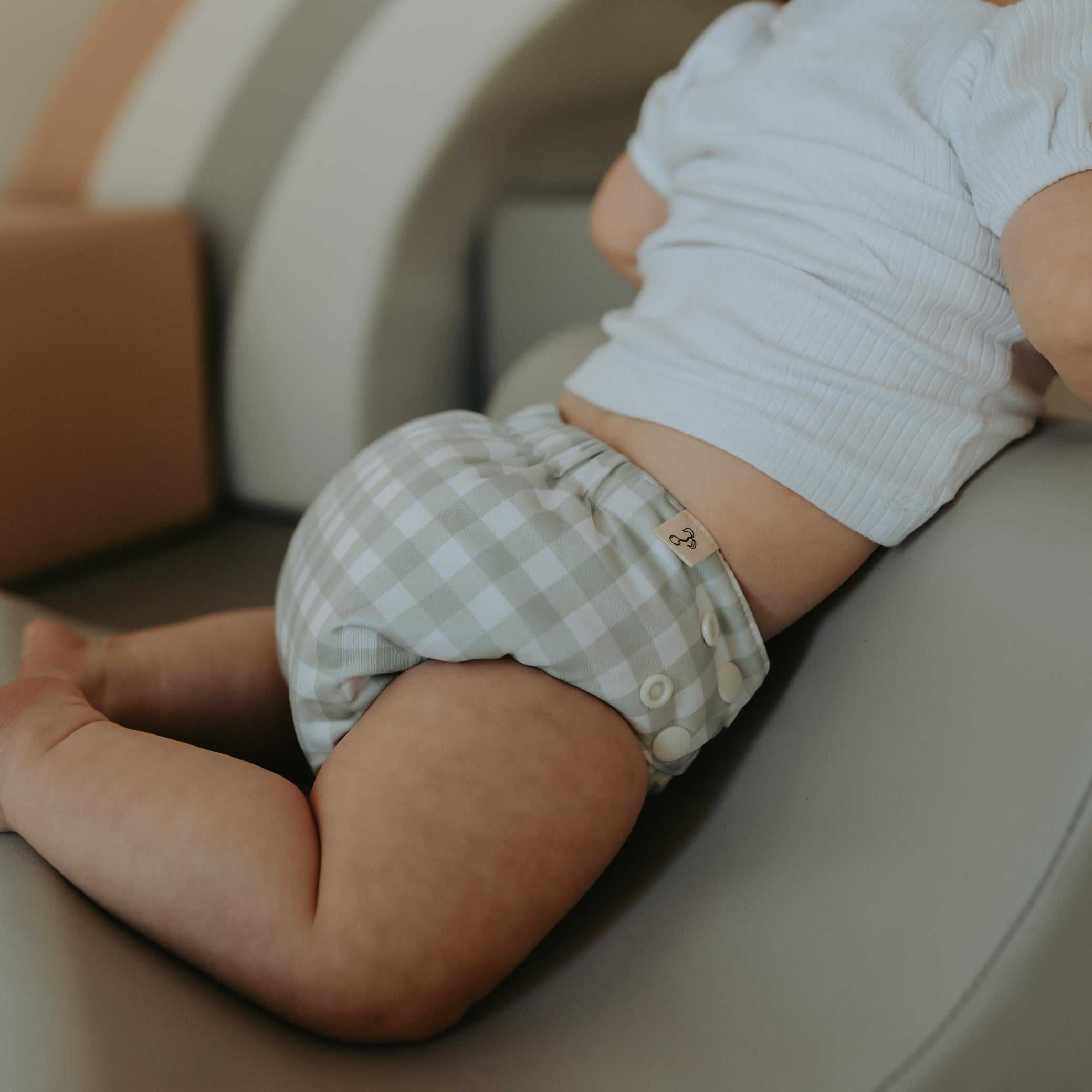
But here is where it gets complicated for a product like a cloth nappy cover that gets washed roughly 200 times in its life.
The recycling process breaks down the internal structure of the plastic. When you melt and re-spin a plastic bottle into a new thread, the result is weaker and more brittle than virgin polyester. And brittle plastic breaks apart more easily in the wash, releasing more microplastics into the water with every single cycle.
The research is clear on this. Independent laboratory testing by the Changing Markets Foundation, conducted by microplastics researchers at Cukurova University in Turkey, found that recycled polyester releases 55% more microplastics per wash than virgin polyester. The particles shed by recycled polyester are also nearly 20% smaller, which matters because smaller particles are harder for ecosystems to filter and easier for living things to absorb.
Why does this matter so much for nappies specifically?
Think about it this way. A fast fashion t-shirt might get washed 20 or 30 times before it is donated or thrown away. Our nappy covers are designed to be washed around 200 times across their life, and many of our customers pass them on to a second or third baby, pushing that number higher still.
If each wash releases more microplastics because we chose recycled polyester, the environmental impact compounds over hundreds of washes. For a one-time use item, the trade-off might be worthwhile. For a reusable product with this kind of wash life, the maths works differently.
Virgin polyester, while it does shed some microplastics, sheds fewer per wash and holds its structure better over hundreds of cycles. That means both less microplastic pollution over the lifetime of the product, and a cover that keeps performing for longer.
This was not an easy call
We are a sustainable brand. We care about the planet deeply, and we know our customers do too. Choosing not to use recycled polyester goes against what a lot of people expect from a brand like ours, and we completely understand why this might seem counterintuitive.
But sustainability is not always as simple as a label that says "recycled." Sometimes it requires looking at the full picture: the whole life of a product, all the ways it touches the environment, and the science behind the materials we choose.
We will continue to monitor the research. If material science catches up and a genuinely lower-shedding recycled option becomes available, we will be among the first to look at it seriously. Until then, we are making the call we believe is most honest and most protective of the little ones who wear our products.
TLDR: recycled polyester sheds more microplastics per wash than virgin polyester. For a product washed 200 times, that adds up. We chose lower lifetime microplastic pollution over a recycled label. That is the honest reason.
Mimi Founder, Mimi & Co mimiandco.com.au
Research & sources
- Changing Markets Foundation & Cukurova University (2025). Spinning Greenwash: How the fashion industry's shift to recycled polyester is worsening microplastic pollution. changingmarkets.org/report/spinning-greenwash/
- ScienceDirect (2024). Release of microplastic fibers from synthetic textiles during household washing. sciencedirect.com/science/article/pii/S0269749124011692
- ScienceDirect (2025). Serviceability and washing durability of recycled polyester, wool, and acrylic: Sustainability concerns and microfiber leaching. sciencedirect.com/science/article/pii/S0926669024024270
- NCBI / PMC (2025). Mechanically Recycled Textiles: A Source of Microplastic Fiber Emissions. ncbi.nlm.nih.gov/pmc/articles/PMC12825150/
- The Fashion Globe (2026). Recycled Polyester Sheds 55% More Microplastics. thefashionglobe.com/recycled-polyester-microplastics
- ScienceDirect (2024). Examining the hidden dangers: Understanding how microplastics affect pregnancy. sciencedirect.com/science/article/abs/pii/S0301211524006304
- PMC (2024). Detection of Microplastics in Human Breast Milk and Its Association with Changes in Human Milk Bacterial Microbiota. pmc.ncbi.nlm.nih.gov/articles/PMC11277308/
- PMC (2025). Health Implications of Microplastic Exposure in Pregnancy and Early Childhood: A Systematic Review. pmc.ncbi.nlm.nih.gov/articles/PMC12412761/
- Frontiers in Endocrinology (2023). Microplastics exposure: implications for human fertility, pregnancy and child health. frontiersin.org/journals/endocrinology/articles/10.3389/fendo.2023.1330396/full


Leave a comment
All comments are moderated before being published.
This site is protected by hCaptcha and the hCaptcha Privacy Policy and Terms of Service apply.