
![Swim Nappy Bundle [Ship Oct 5 - 10] - Mimi & Co](http://mimiandco.com.au/cdn/shop/files/swim-nappy-bundle-ship-oct-5-10-5796576.jpg?v=1770171125)

![Toilet Training Undies Pants [Jan Preorder] - Mimi & Co](http://mimiandco.com.au/cdn/shop/files/toilet-training-undies-pants-jan-preorder-6316642.jpg?v=1766216229&width=1200)


![Reusable Bamboo Mimi™ Wipes [5 Pack] - Mimi & Co](http://mimiandco.com.au/cdn/shop/files/reusable-bamboo-mimi-wipes-5-pack-7600782.jpg?v=1773649075)

![Reusable Mimi® Menstrual Underwear [Shipping 31/9] - Mimi & Co](http://mimiandco.com.au/cdn/shop/files/reusable-mimi-menstrual-underwear-shipping-319-6508918.png?v=1776734572)



![Toilet Training Undies Pants 2.0 | Baby Duck [Ships September] - Mimi & Co](http://mimiandco.com.au/cdn/shop/files/toilet-training-undies-pants-20-baby-duck-ships-september-9296055.png?v=1784808614&width=104)



![Travel Bamboo Change Mat [Ships March 14th] - Mimi & Co](http://mimiandco.com.au/cdn/shop/files/travel-bamboo-change-mat-ships-march-14th-1490896.jpg?v=1769606287&width=104)


![Reusable Bamboo Mimi™ Wipes [10 Pack] - Mimi & Co](http://mimiandco.com.au/cdn/shop/files/reusable-bamboo-mimi-wipes-10-pack-2507756.jpg?v=1773666247&width=104)
Every parent gets told the same thing about toilet training: "just put them in undies and let them have accidents."
Then day one happens. There is wee on the rug, wee on the car seat, and a pair of poo-filled undies you are now trying to peel down two wriggling legs without redecorating the hallway. By day three you have quietly put the nappies back on, and the whole thing has slid to "we'll try again in a few months."
Here is what nobody tells you. Toilet training is not a switch you flip. It is a handover, and it happens in stages. Your child has to learn one thing before they can learn the next, and the gear they wear at each stage either speeds that up or gets in the way.
So we built a three step path that moves your little one from full nappy to real undies, with a product designed for each step. No cold-turkey chaos. No going backwards. And no choosing between "protect my floors" and "actually teach my kid."
Why toilet training stalls (it is usually the undies, not the child)
Most toilet training gear forces you into one of two camps, and both of them have a hidden cost.
Camp one: straight into cotton undies. Great for learning, terrible for life. Cotton holds nothing. A wee goes through in seconds and lands wherever your toddler is standing. Worse, when a poo accident happens, and it will, you are dragging soiled underwear down their legs. Everyone ends up upset.
Camp two: thick, nappy-style training pants. They contain the mess beautifully. They also feel exactly like a nappy, and most of them have a stay-dry layer that wicks moisture away from the skin. That layer is brilliant in a nappy. In toilet training it is the problem. If your child never feels wet, they never make the connection between "I did a wee" and "now I am uncomfortable." You have taken away the single most useful piece of feedback in the entire process.
That is the real reason so many toilet training attempts stall around week two. The child is ready. The undies are working against them.
The Mimi & Co 3 step toilet training method
The fix is not one magic product. It is a sequence, where each step removes one layer of protection only once your child has earned the skill that replaces it.
Step 1: Turn your nappy into a teaching tool (insert on top of the pocket)
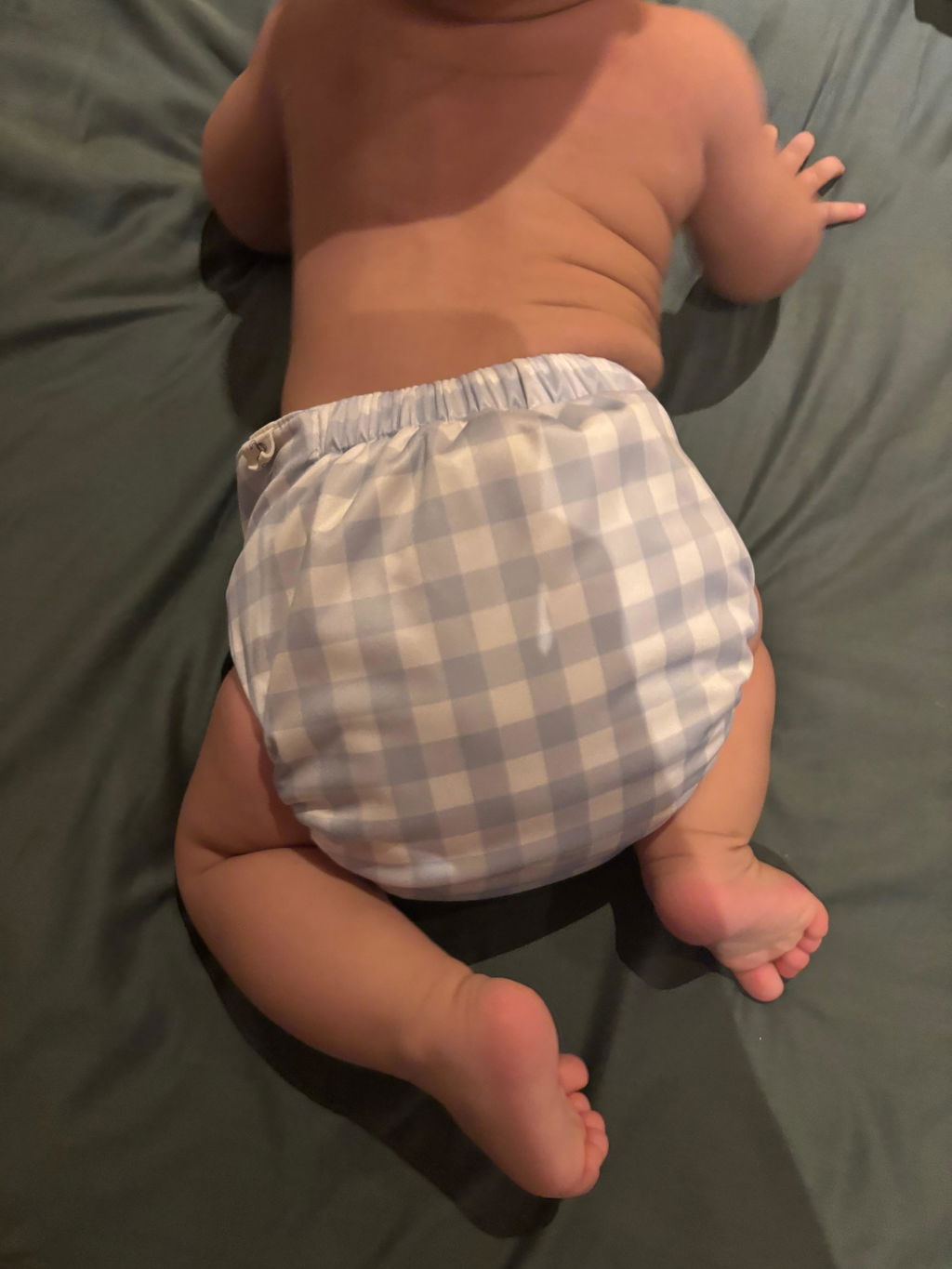
You do not need to buy anything for this step. If you already have Mimi® 2.0 Cloth Nappies, you already have everything you need. You just use them differently.
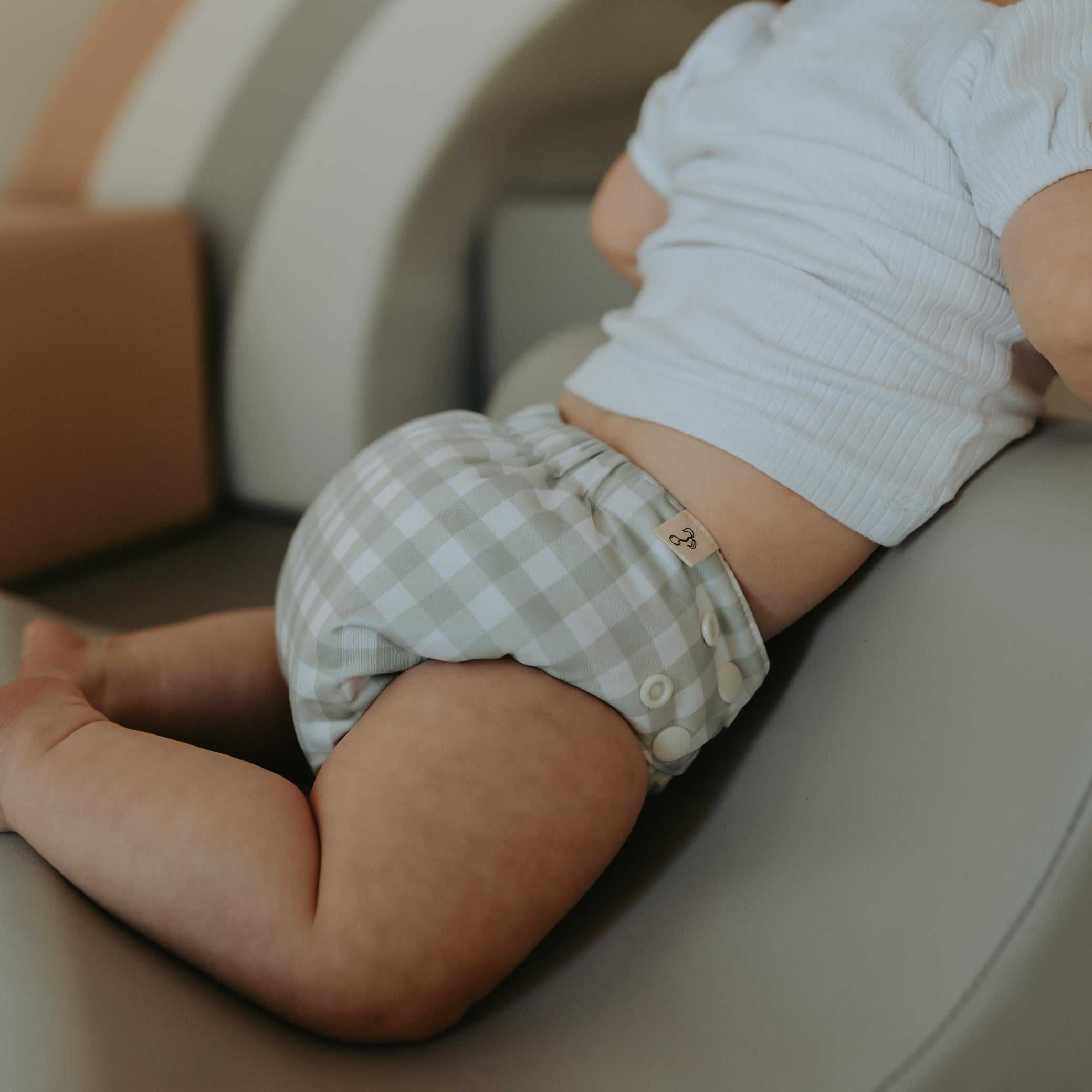
Normally you tuck the inserts inside the pocket, so the stay-dry pocket lining sits against your baby's skin and keeps their bottom feeling dry. Lovely for a newborn. Useless for a learner.
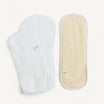
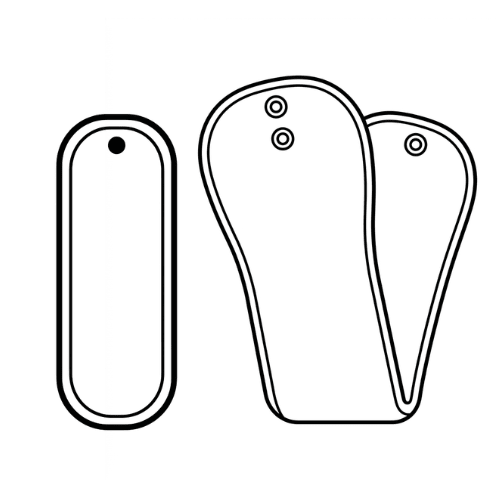
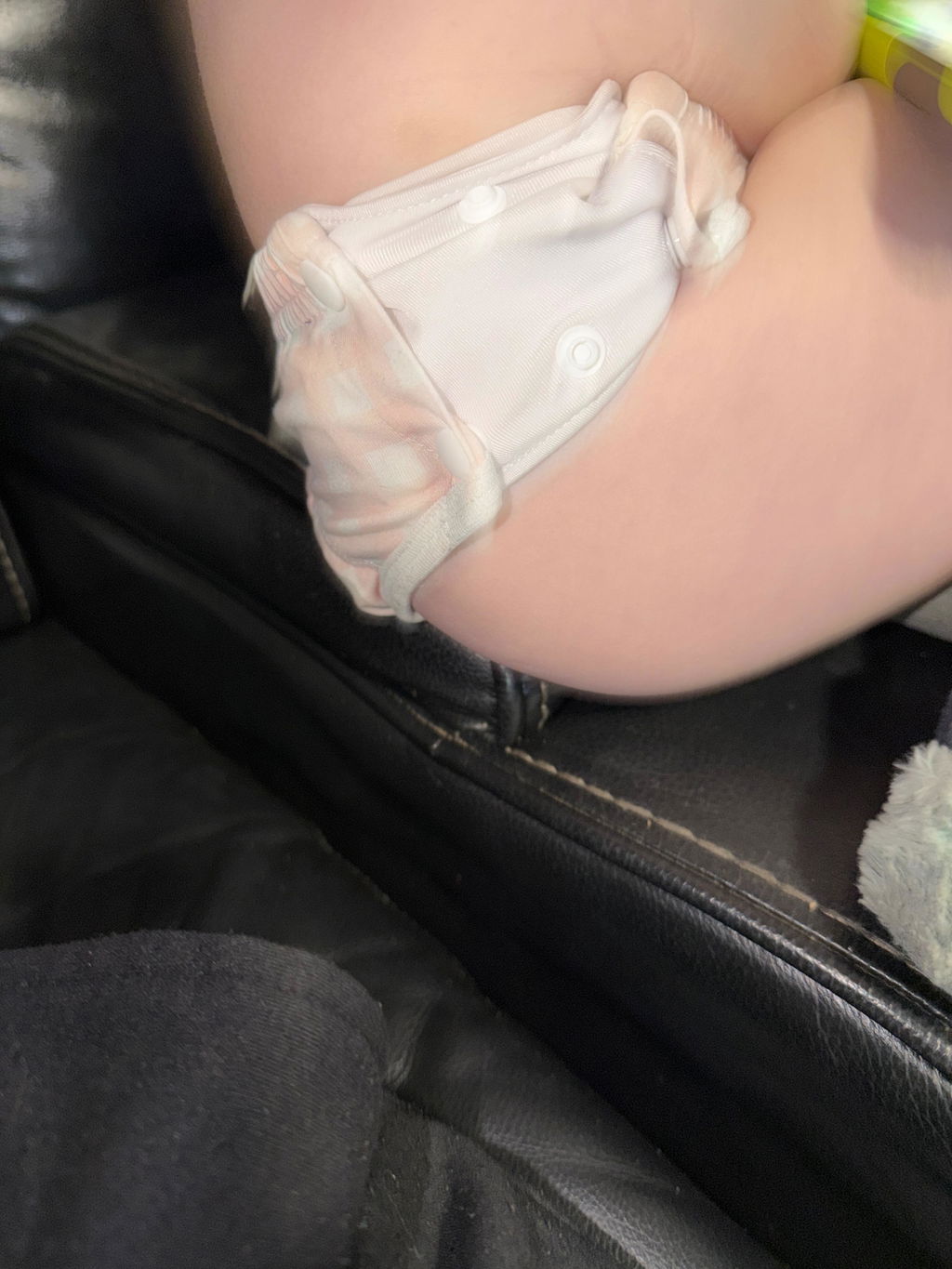
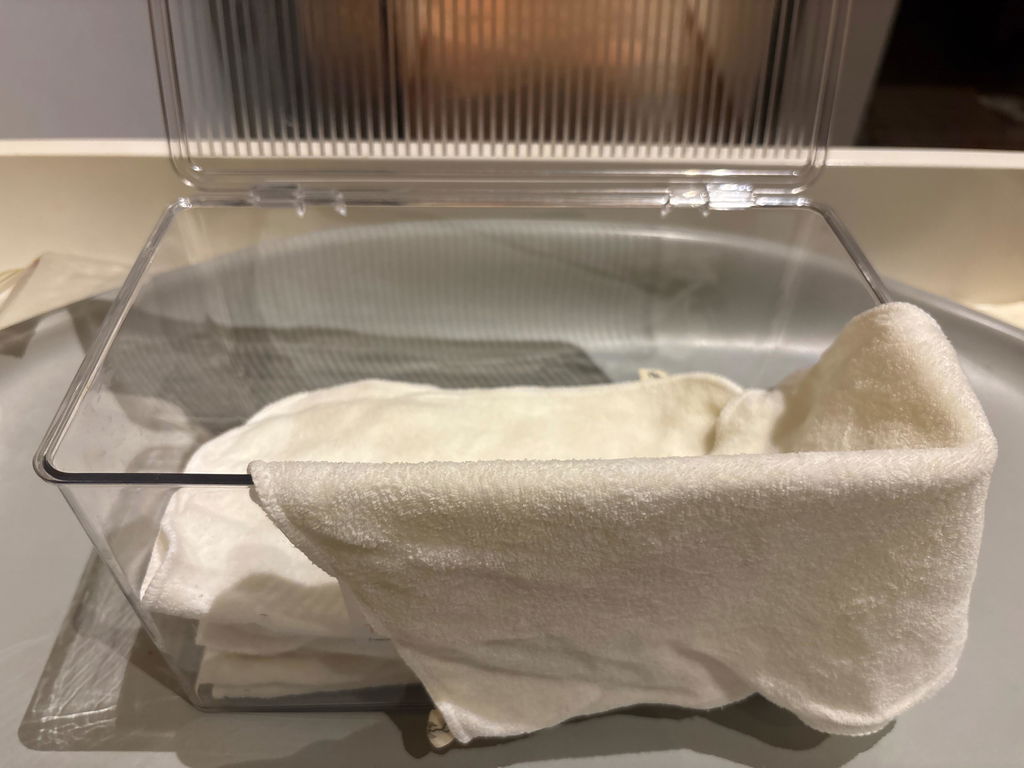
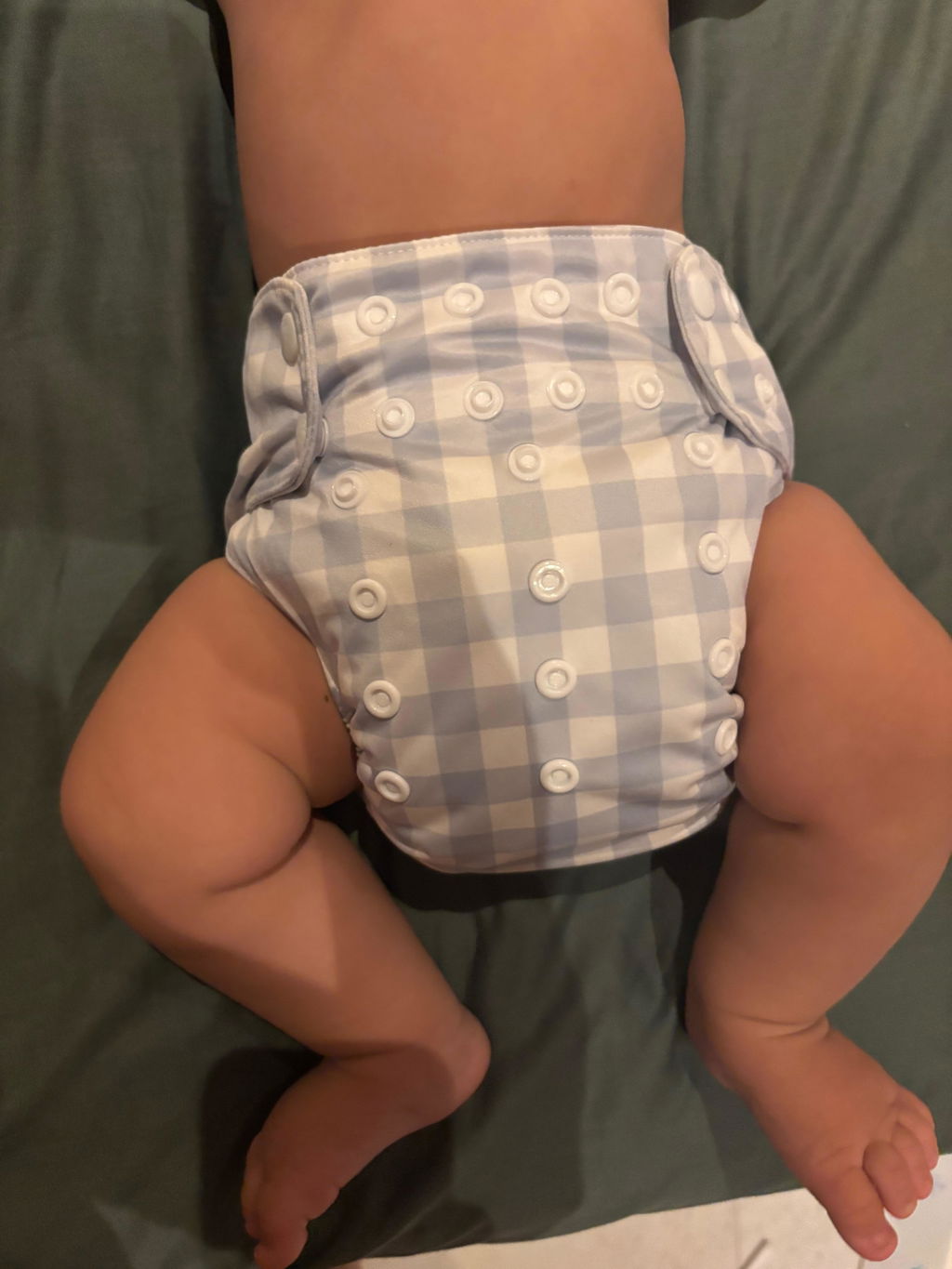
For step 1, lay the insert on top of the pocket instead. Same nappy, same absorbency, same leak protection, but now the natural fibres are the layer touching the skin. This is our WetAware® approach, and it changes the experience completely: when bub does a wee, they feel it.
Why this matters so much:
- Nothing is at risk. Your child is still in a nappy with full nappy function. No puddles on the floorboards, no anxiety about the school run or the shops.
- The feedback loop starts early. Wee, then wet, then a change. Repeated over and over, that sequence teaches cause and effect long before you ever mention a potty.
- It costs you nothing. No new product, no new routine, just a different way of stuffing the nappy you already own.
- Nappy changes become the conversation. "Oh, you did a wee, let's get you dry." You are naming the sensation while they are feeling it, which is exactly how the language sticks.
Run step 1 for a few weeks before you plan to start properly. Most parents notice their toddler starts telling them they are wet, or pulling at the nappy, or heading for a quiet corner before a poo. Those are the readiness signs you are looking for, and step 1 is what makes them visible.
Step 2: Toilet training undies that feel real but protect like a nappy
This is the step that makes or breaks it, and it is the step almost every other brand skips.
Our Tiny Transitions™ toilet training undies are designed to sit precisely in the gap: undies to your child, insurance to you.
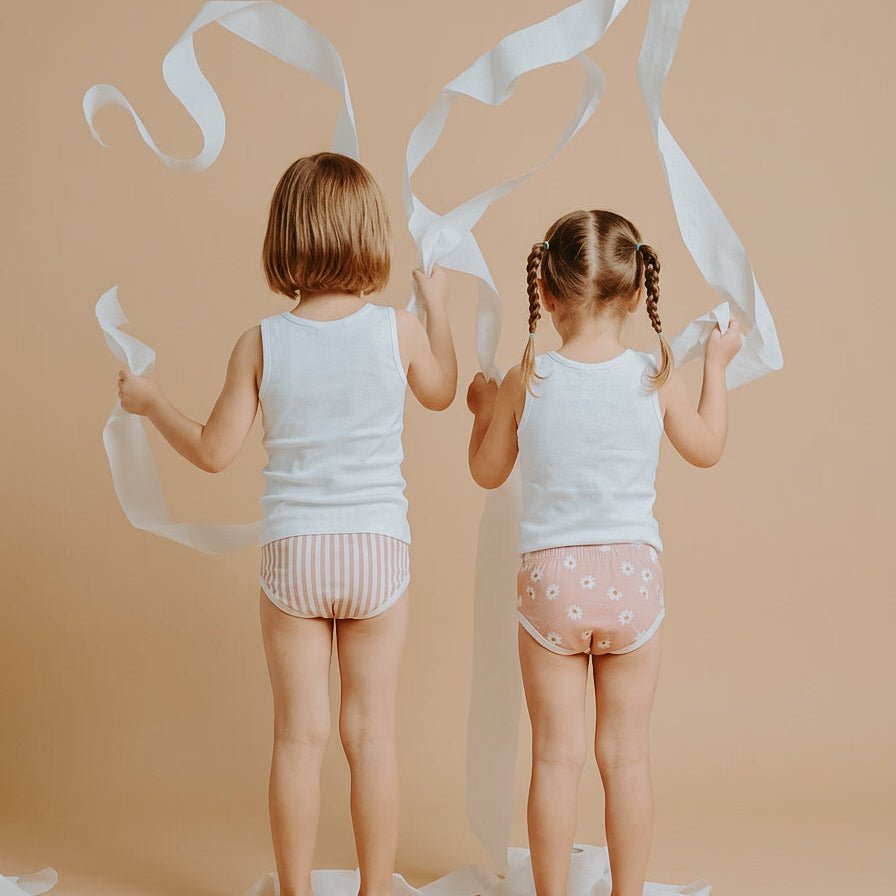
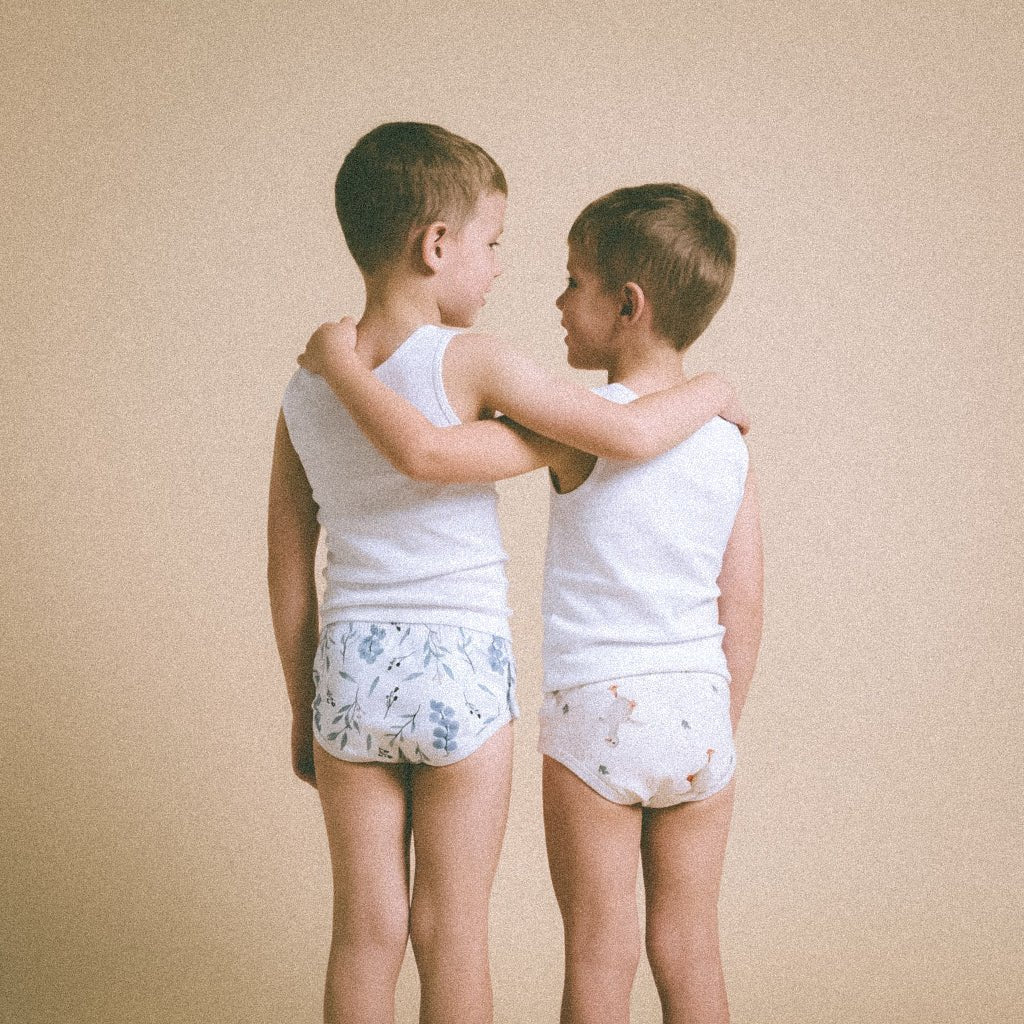
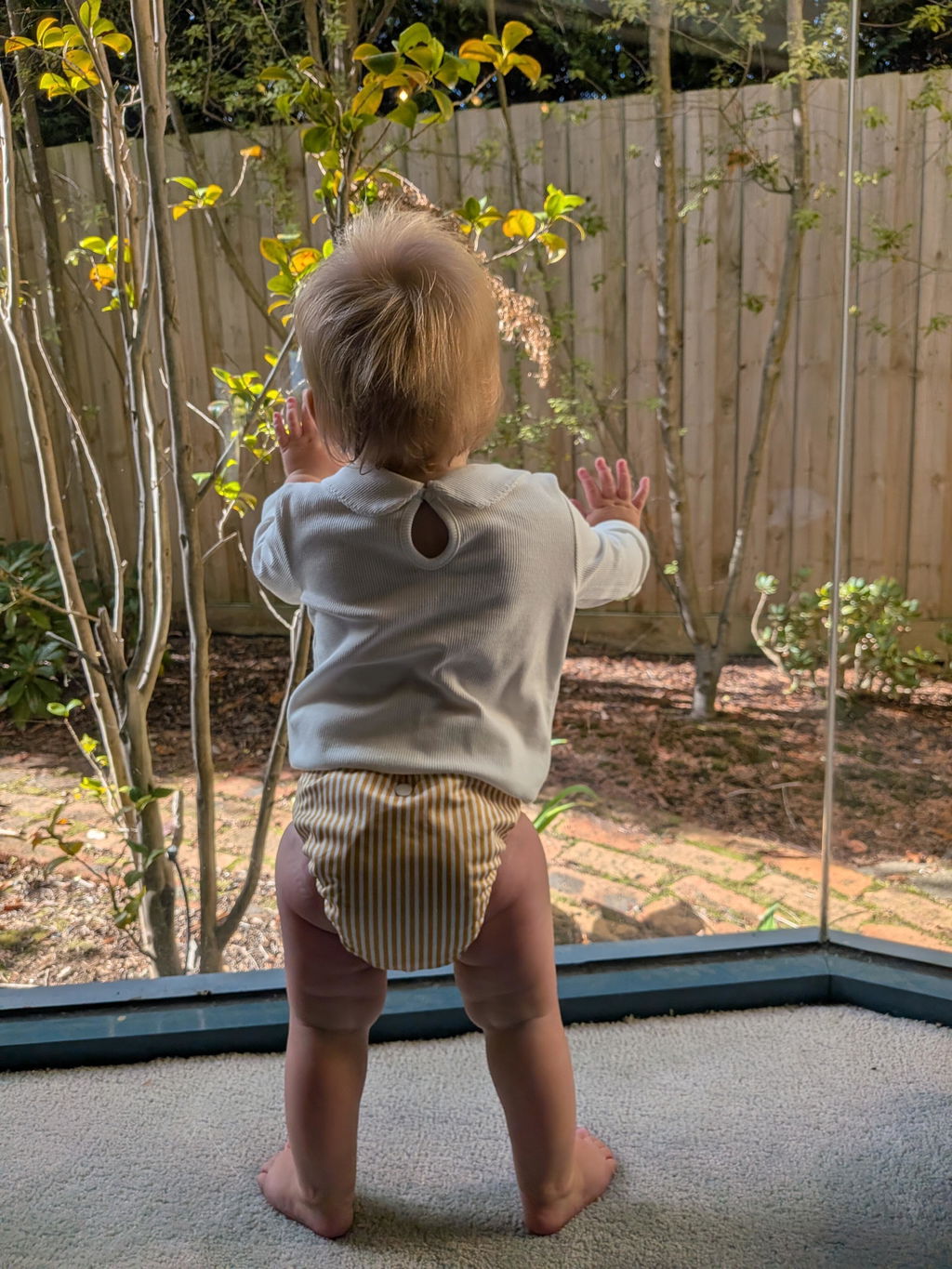
To your toddler, they are real underwear. Soft, stretchy, a proper 95% cotton outer, patterns they get to choose. That "big kid" feeling is not a nice extra, it is the motivation that drives the whole stage.
Hidden inside, though, is everything you actually need:
WetAware® technology built in. A natural, absorbent inner that lets your child feel wet the instant they wee. There is no stay-dry layer blocking the signal, because the signal is the point. They feel it, they notice it, they learn faster.
Enough absorbency for the little leaks. Not a nappy's worth, deliberately. Just enough to catch the dribble that happens when your child pauses mid-play, realises, and runs. That small buffer buys you the seconds between "uh oh" and the toilet.
A hidden waterproof layer. The bit that saves your car seat, the pram, grandma's couch and your sanity. It contains an accident without adding nappy bulk, so your child never twigs that they are wearing anything other than undies.
Side snaps, which are the unsung hero. When a poo accident happens, you unsnap both sides and lift the undies away. No dragging soiled underwear down their legs. No mess smeared from ankle to knee. Anyone who has done it the other way understands instantly why this feature exists.
Adjustable side sizing. Toddlers change shape constantly. The tabs let you fine tune the fit so the undies stay put through a growth spurt instead of ending up in the donate pile.
Two sizes cover the whole journey: Small (8kg to 18kg, roughly size 0 to 5) and Medium (18kg to 30kg, roughly size 5 to 10).
Step 2 is where the actual training happens. Your child is getting real feedback from real undies, and you are not spending your week on your hands and knees with a cloth. That combination is what keeps families going long enough to finish.
How long do you stay here? Until accidents become rare rather than routine. Some children need a week, some need two months. Neither is a problem. The undies are doing their job the entire time.
Step 3: Regular undies, and you are done
When your child is reliably telling you before they need to go, holding on for a few minutes, and having only the occasional accident, you move them into ordinary undies.
That is the whole point of steps 1 and 2. By the time you get here, it is not a leap of faith. It is a formality, because your child has already learned the sensation, the timing and the routine while wearing something that could catch a mistake.
Plenty of families keep a few pairs of training undies in the nappy bag for a while: long car trips, day care, a big day out, or the first few weeks of a new routine. That is not going backwards, that is just being sensible.
When to move from one step to the next
There is no calendar for this, only signals. Use these as your guide.
Move from step 1 to step 2 when your child:
- Tells you (in words, signs or a very obvious look) that they are wet or have done a poo
- Stays dry for longer stretches, often waking dry from a nap
- Shows interest in the toilet or potty, or in what you and older siblings are doing
- Can pull pants up and down with a bit of help
Move from step 2 to step 3 when your child:
- Tells you before they need to go, most of the time
- Can hold on for a few minutes while you get to a toilet
- Has gone several days with no accidents, or only one
- Asks for real undies (a genuinely reliable sign)
If you move forward and it does not go well, step back one level for a fortnight and try again. Because our system is staged, going back is a small adjustment rather than an admission of defeat, and your child never experiences it as failure.
What you actually need to start
You do not need a cupboard full of gear. For most families the whole kit is:
- The Mimi® 2.0 Cloth Nappies you already own, with the inserts sitting on top of the pocket
- Five to eight pairs of toilet training undies, which covers a normal day plus the wash cycle
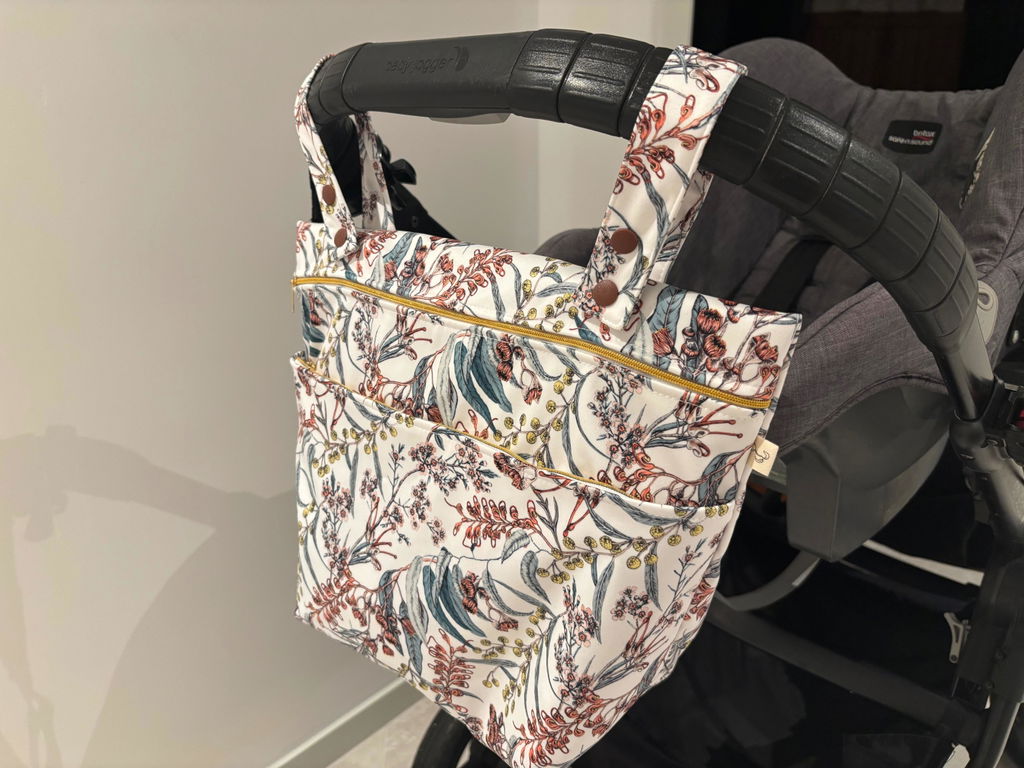
- A wet bag for the accidents that happen while you are out
- A toilet training mat for the floor near where your child plays
Add a potty or a toilet seat insert, and that is genuinely it.
Common questions about toilet training undies
Are toilet training undies just a thin nappy? No, and the difference matters. A nappy is built to keep your child feeling dry. Toilet training undies are built to let them feel wet while stopping that wetness reaching the floor. Opposite goals, opposite design.
Won't feeling wet upset my child? Mild discomfort is the teacher here. It is not distress, it is information. Children who feel wet connect the dots faster than children whose undies hide it from them.
How many pairs do I need? Five to eight for most families. Accidents cluster in the first week, so having enough on hand is what stops you reaching for the nappies out of sheer exhaustion.
What about night time? Night dryness is a separate developmental milestone and it arrives later, sometimes much later. Keep your little one in nappies overnight while you work through the day time steps. There is no benefit to rushing it.
Can I skip step 1? You can, but step 1 is the cheapest and easiest part of the whole process, and it does a lot of quiet work before you ever start. Moving the insert on top of the pocket takes two seconds and it makes step 2 noticeably shorter.
Are they washable? Yes. They wash and dry with your regular nappy laundry, and they will see you through more than one child.
Toilet training is a handover, not a leap
The families who find toilet training hardest are usually not doing anything wrong. They have just been handed an all-or-nothing choice: full nappy today, bare cotton undies tomorrow, good luck.
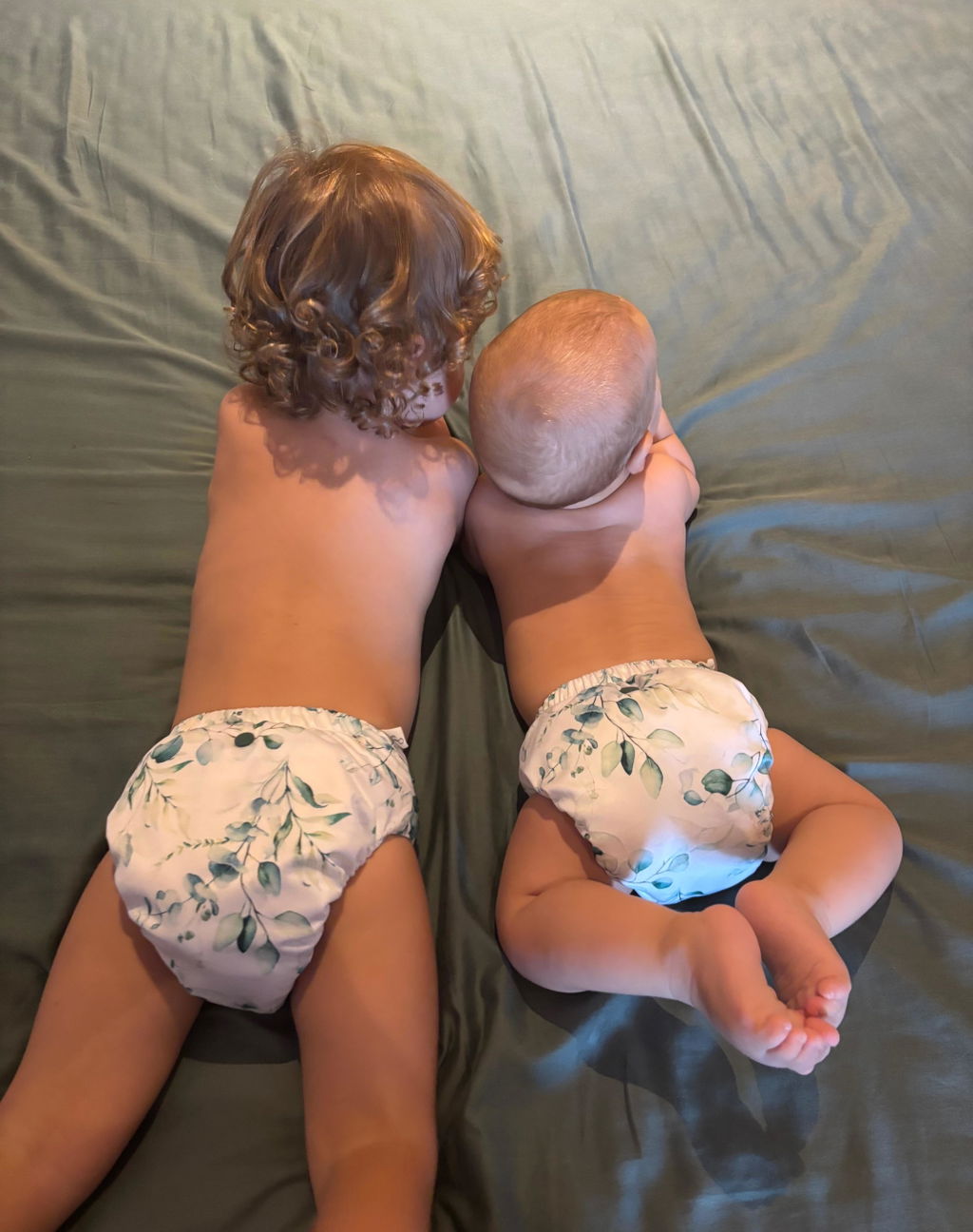
Our three steps take that leap and turn it into a staircase. Feel wet safely in a nappy. Practise for real in toilet training undies that catch the mistakes. Graduate into the real thing when your child has already proved they are ready.
Since 2020 we have helped more than 50,000 Australian families make the switch to reusables, and toilet training is the stage they ask us about most. This is the method we give them.
Choose your patterns, pick your size, and start step 1 tonight with the nappies already in your drawer.

Leave a comment
All comments are moderated before being published.
This site is protected by hCaptcha and the hCaptcha Privacy Policy and Terms of Service apply.